
Assisting Assassins
Two Jackals: The Forgotten 1979 Senate Report You Are Still Not Allowed to Read - Part 1

“If you touch her, I will kill you.” This was the warning given to Armando Fernández Larios about Luisa Mónica Lagos Aguirre, who were both members of DINA, the Chilean secret police. The pair were to fly to Miami using aliases, under the pretext of being a couple visiting Disney World. Colonel Pedro Espinoza, DINA’s Chief of Operations, was romantically involved with Lagos and instructed Fernández to keep his hands to himself. Despite the caution from his superior, Fernández spent the flight wondering if Lagos would sleep with him; they were supposedly married in this scenario and sharing hotel rooms after all.
Lagos had begun working as a prostitute during an Organization of American States conference in Santiago, motivated by her desire to maintain a luxurious lifestyle. She worked in a military-run brothel and, while working as an agent for DINA, she used position to gather intelligence from foreign delegates and recruit other women, including her sister, into similar roles. One objective was to entrap Henry Kissinger in a scandal, although he ultimately avoided the setup.
In mid-1976, Espinoza assigned Lagos a more significant mission in the United States. Chosen for her ability to attract men, she was tasked with getting close to exiled Chilean figure Orlando Letelier and gathering information on him. After arriving in the United States, Lagos managed to briefly meet with Letelier: “He was objectively attractive, manly, and gave the impression of a great gentleman,” she recalled. “We spoke little, however, apart from a few elegant flirtations. After excusing himself, he left, apparently to attend to his work and because of his preoccupations with a Venezuelan woman.” She learned little beyond basic details about him, such as the type of car he drove. Since Letelier was often away traveling, Fernández abandoned the mission and spent some time visiting his family in Virginia. Fernández also took the time to attempt to seduce Lagos and in doing so disclosed the true objective of their assignment: “He told me he could not understand a man like Espinoza, who sent a woman he loved to take part in a crime. It was then I learned that the mission was to assassinate Orlando Letelier.”
Michael Townley, a U.S.-born DINA agent, was tasked by Espinoza on September 7 to join the fake couple in the mission. He travelled to New York using a false identity and smuggled in bomb components. He also brought in his shirt pocket a bottle of sarin, a highly lethal nerve agent. The sarin was brought onto the flight concealed in a perfume bottle and had the chemical weapon spilled, it could have caused mass casualties. Townley had developed an interest in espionage and assassination techniques by studying spy and detective novels. He treated fiction as a practical guide, learning tradecraft skills such as using false identities, avoiding detection, and conducting covert operations. A major influence on him was the 1971 novel The Day of the Jackal by English author Frederick Forsyth. Townley admired the book’s assassin: an anonymous, highly skilled operative who could move across borders undetected and carry out missions without leaving a trace. He now sought a similar role for himself in real life; for this mission, he just needed to get through customs first.
At immigration, his passport bearing the false identity “Hans Petersen Silva” was checked against a U.S. government lookout book. He became nervous when the officer appeared to match his alias to an entry. “He examined my passport several times, reread the inscription, and finally shrugged his shoulders and returned it to me,” Townley remembered. He was ultimately cleared and allowed entry.
Following his arrival, Townley met with Fernández and Lagos, describing the female agent as “extremely well-dressed and well-groomed and…carrying a fashion magazine. My initial impression was favorable since she seemed to be a world apart from her and Captain Fernández’s mission.” Fernández provided him with details regarding Letelier’s residence, workplace, vehicles, and daily routines. In looking at the documents, Townley committed as much as he could to memory and destroyed the papers. He took out a photo of Letelier from a hidden compartment in his wallet; he needed to work from memory now and destroy all evidence linking him to his target. Townley then drove to New Jersey to coordinate with Cuban-American associates tied to anti-Castro networks. There, he conveyed that he had received orders for an urgent operation targeting Letelier, the former Chilean cabinet minister living in Washington, D.C.
Soon after, Townley met with the Cuban exiles Guillermo Novo and José Dionisio Suárez Esquivel in New Jersey and formally proposed the assassination plan. He insisted Letelier needed to be killed quickly. The Cuban operatives were initially hesitant but ultimately open to participating, particularly if Townley himself took part in the operation. He was to become more involved in the assassination than he originally thought he would be.
Execution
The team met at a McDonald’s restaurant and checked into various hotels and motels in the area. Rather use the sarin as the assassination weapon, purchases were made at Sears and RadioShack to construct a bomb, which they decided to place under Letelier’s car in advance of his Monday morning drive to work. One of the Cuban operatives, Suárez, wanted the group to build the bomb as quickly as possible, since he had lost his job at a car dealership recently and was to start a new job in New Jersey on Monday. The group began assembling an explosive device on the Saturday but still had time to joke with a waitress at a hotel about her diet through which she had lost a total of 60 pounds. Working from a motel room, they constructed a bomb using TNT, plastique, and improvised triggering components.
That night, satisfied with their work, three members of the group drove to Letelier’s home on Ogden Court, a cul-de-sac in Bethesda, Maryland. On the way there, the two Cuban operatives demanded that Townley install the bomb himself under the car. “They expected me to place the device on the car as they wished to have a DINA agent, namely myself, directly tied to the placing of the device,” he later stated. Townley had not planned on doing this but reluctantly gave in and agreed to tape the bomb to the car.
Upon their first entry into the neighborhood, a group of people were entering a home so the team turned around and waited. Townley was dropped off at the top of a hill; he could see television screens flashing from windows as he walked toward Letelier’s house. There was ample opportunity for Townley to be spotted; he could hear dogs barking. Letelier’s neighbors happened to include an FBI agent on one side and a State Department foreign service officer on the other. His car, a Chevrolet Malibu Classic, was parked in the driveway, its front end pointed toward the house. Townley slid under the driver’s side of the car and removed the bomb hidden underneath his shirt. He attached the device using electrical tape and checked its position using a small flashlight.
At one point, Townley stopped as he heard the sound of footsteps nearby. The noise faded and he proceeded to fasten tape from the speedometer cable to the device. A car engine started up; he could hear a police radio and saw the tires moving out of the corner of his eye. Sweat was pouring profusely from his face as he tried to remain motionless. The car drove on and Townley rechecked his work with the flashlight. Briefly satisfied, he slid out until he remembered the bomb switch—was it in the on or off position? He went back under the car, trying to remember which position turned on the device, and flicked the switch, pushing the tape further into place. Townley’s mind was filled with doubt as he walked back up the hill out of Ogden Court. He warned his conspirators that he was not sure if the switch was in the right position. The operatives agreed to detonate the device when Letelier reached near 46th Street NW and that he was to be alone in the car. Townley was flown out of Washington and before leaving, he delivered a coded message through his wife: the bomb was in place.
After the CIA-supported coup that overthrew the government of Salvador Allende in Chile and brought Augusto Pinochet to power in 1973, Letelier had been imprisoned on Dawson Island and was subjected to harsh interrogation. He was accused of being involved in a propaganda scheme linked to the company ITT, a U.S. manufacturing company. His interrogators claimed he had paid journalist Jack Anderson $70,000, fabricated documents, and personally delivered them to implicate ITT in political interference in Chile. In reality, the documents were real and showed that ITT had offered funds to help block Allende’s rise to the presidency. During questioning of Letelier, the interrogators would switch topics abruptly, as he recalled: “‘Do you know so and so?’ Then they’d change the subject to the Jack Anderson column, and then say, ‘Do you know that your wife is a whore?’”
Scoop
When Dale Van Atta first joined Jack Anderson’s team writing for the syndicated column “Washington Merry-Go-Round” in 1979, one of his first journalistic successes was discovering that members of Congress were editing their own hearing testimony in official transcripts before they were released to the public. One evening, Van Atta visited the Government Printing Office and pretended to be a staffer whose job it was to make the requested revisions for lawmakers. Most of the Printing Office team had left for the day and the relaxed atmosphere worked to Van Atta’s advantage. The editor handed him hearing transcripts marked up with the handwritten alterations from several members of Congress. It turned out that after attending hearings, legislators would return to their offices and request the transcripts, revising them not just for grammar, but occasionally to change their arguments or stated positions. While Washington saw this practice as routine, Van Atta’s exposé of the deceptive practice caused regular American citizens to be outraged.
Among the thousands of edits Van Atta sifted through, he found congressmen completely changing their stances after the fact, such as modifying “most people can take issue” to “most people can take heart” and “I would vote for it” to “I would strongly oppose it” in statements referring to bills under debate. “In other words,” Anderson wrote in his column crediting Van Atta’s work, “the Congressional Record is a fraud. Insiders have called it a travesty, a comic book, a monumental sham.” Initially, the Printing Office addressed the issue by preventing reporters from gaining access to the annotated transcript. The editing practice continued until live television coverage of hearings made such revisions much more challenging to conceal.
Van Atta was on the lookout for more stories. During a 1979 staff meeting, the column’s co-author Joseph Spear mentioned that there were rumors that a Senate committee had drafted a report that described how foreign intelligence operatives were allowed to work freely in the United States. The report had been prompted by a scandal involving the Korean intelligence service, the KCIA, having found to be operating in Washington. This led the Senate to investigate other foreign intelligence services and the extent to which they operated in the U.S. The report existed somewhere in Washington, Spear told the reporters, and their job was to find it. Van Atta was new to this journalistic beat but managed to learn that less than a dozen copies had been circulated to a select few. He discovered their names and targeted one prominent individual, with whom he relentlessly pressed his case, appealing to the man’s sense of fairness and pointing to the public’s right to know.
On a quiet Saturday afternoon, the previously reluctant source handed Van Atta a five-page executive summary of the Senate report. From what he could glean about the full report, there were references to an international terrorist the U.S. had let slip away, a bizarre assassination plot involving a foreign leader in Asia, and details regarding a coordinated network of intelligence agencies who had agreed to eliminate each other’s political opponents domestically and abroad, including within the United States. Van Atta went back to his source and begged for more: “I’ve got to have the whole report.” After two more weeks of pressure, the man relented.
On another Saturday afternoon, Van Atta visited the source’s office and was provided with gloves and a stack of documents with the brief instruction: “Here. You have half an hour.” Van Atta could type faster than he could write by hand, so he asked: “Can I at least use a typewriter to copy information?” The man agreed and left for 30 minutes, returning to collect the material. “Just let me xerox a few pages,” he insisted. The source hesitated for a while before giving in: “Put paper clips on the pages you want and I’ll copy them.” Van Atta proceeded to mark nearly every page with a paper clip. The source had copied the first seventy pages by the time the machine had run out of paper. He did not know how to refill the printer paper, he told the reporter. Van Atta offered to assist him but the man refused; he was not about to let a journalist into the copy room. Van Atta decided he had taken this as far as he could and kept the 70 pages, enough to fuel revelations on foreign intelligence operations spanning eight Jack Anderson columns. The vast majority of the report remains unavailable to the public to this day.
Embassy Row
Townley sat at a restaurant in Miami with a beer in his hand, shaking. His wife asked him what the matter was. “I’m nervous by nature,” he replied. News was circulating about an explosion in Washington, D.C. It turned out the bombing had not gone exactly according to the plan.
Attorney William Hayden happened to be driving behind Letelier’s car the morning of September 21, 1976. Letelier was driving to work with his co-worker, Ronni Moffitt, in the passenger seat, and her husband, Michael Moffitt, sitting in the back seat. The two vehicles passed the Chilean Embassy and entered Sheridan Circle near 23rd Street NW in Washington, D.C. Hayden saw a bright flash of light and was jolted by a shockwave: “I saw an automobile actually coming down out of the air,” he recounted. “There were flames coming out.” Michael Moffitt, injured and disoriented, stumbled out of the car and tried desperately to help Letelier still in the driver’s seat but discovered that the lower half of his body had been blown off. He also saw his wife, Ronni, lying on a lawn; a woman was trying to help her. “Do you want me to help?” Michael asked. “No, let me try to stop the bleeding,” Ronni replied. The woman tried to position her to stop the blood from flowing. Michael remembered that “blood was just pouring out of her mouth.” Police and emergency responders quickly arrived, finding a gruesome scene. Michael shouted: “The fascists killed him. DINA killed him. Pinochet, the murderer.” Letelier was removed from the wreckage but died en route to the hospital. Ronni was also rushed for medical care; Michael was prevented from accompanying her in the ambulance. She died from her injuries 47 minutes after Letelier. Michael appeared on television, still wearing a hospital shirt, grieving the death of his 25-year-old wife. “The United States government helped to overthrow the government of Allende and to put these dictators in power,” he told the press. “And they’re responsible for killing my wife.”
1979 Report
A declassified version of the 1979 Senate “Staff Report Concerning Activities of Certain Foreign Intelligence Agencies in the United States” is partly available through the Reagan Library. However, it presents only the first 15 pages and most information unrelated to Chile remains classified. The report, written by Senate staffer Michael Glennon, found that although Chile did not maintain officially stationed intelligence officers in the U.S., its agents entered the country using false identities to conduct clandestine operations that often went undetected. Chile’s primary intelligence agency, DINA, was established in 1974 under President Augusto Pinochet and led by Manuel Contreras, initially to suppress internal opposition but later expanding its mission internationally to monitor and target dissidents abroad, which included assassination.
In 1977, the report continued, amid growing international criticism, especially following the killing of Letelier and Moffitt in Washington, D.C., DINA was dissolved and replaced by the National Information Center (Central Nacional de Informaciones, CNI). While the new agency had fewer formal powers and some improvements in human rights practices, it continued to carry out intelligence operations. The report highlighted Chile’s central role in Operation Condor, a coordinated network of South American intelligence services that collaborated to track, detain, and eliminate political opponents across borders. This alliance included a secret “phase three” capability, allowing multinational teams to travel globally and conduct assassinations using false documentation.
The report also detailed how Chilean agents used the United States as a base for logistical support, including acquiring surveillance equipment and operating under false passports. It noted that plans were considered to establish a Condor operational base in Miami, though these were abandoned after U.S. objections. Additionally, evidence suggests that international assassination plots, some successful, others foiled, were carried out or planned under Condor’s framework. The report quoted the FBI stating in 1977 that it was “not beyond the realm of possibility that the recent assassination of Orlando Letelier in Washington, D.C. may have been carried out as a third phase of ‘Operation Condor.’” This was supported by subsequent investigations and the Letelier case brought out the beginning of Condor’s exposure to the broader public.
Jackal
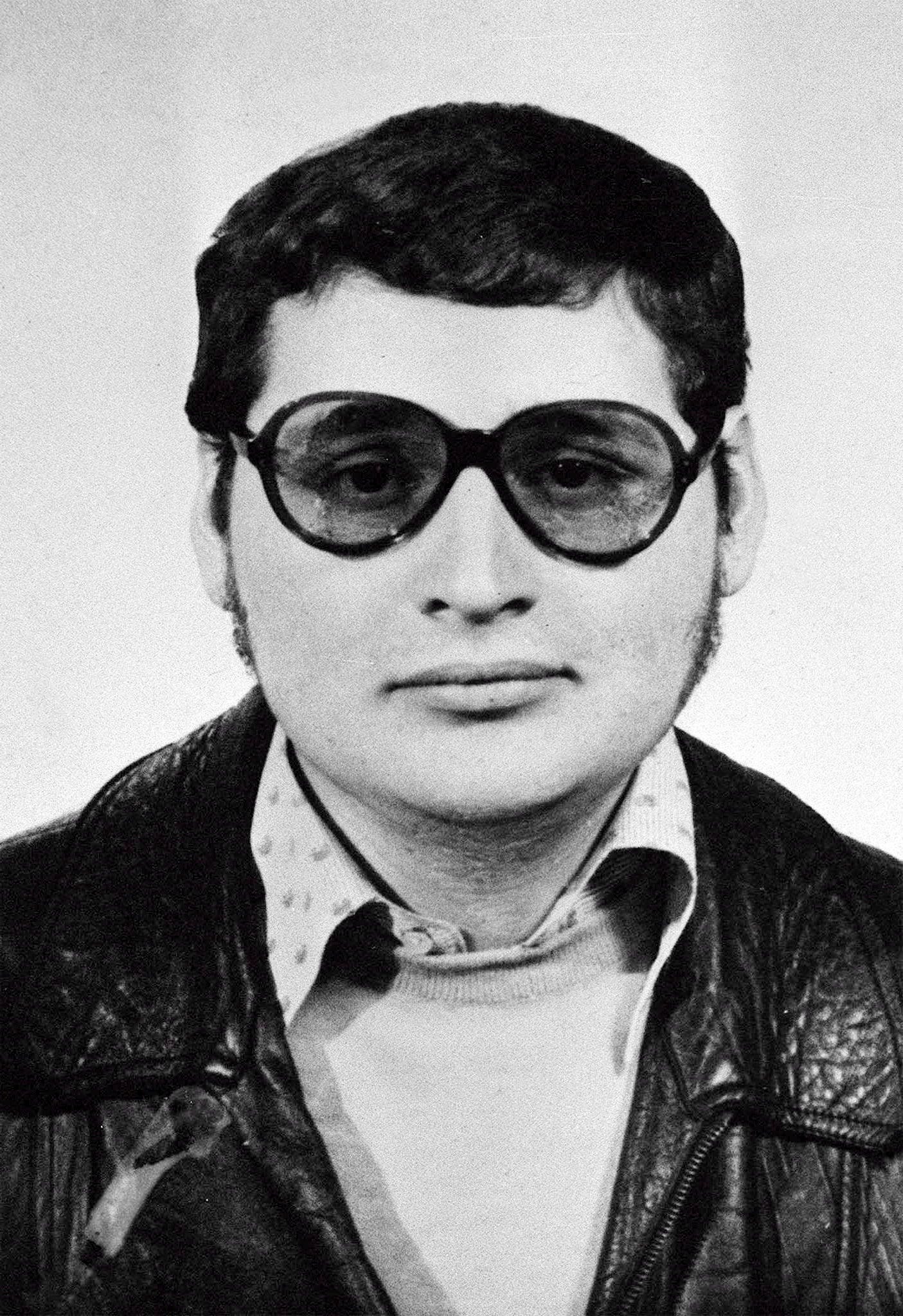
The 1979 Senate report contained a brief but significant reference to another assassin, Carlos the Jackal. The Venezuelan’s real name was Ilich Ramírez Sánchez and he had adopted the nom de guerre of Carlos by the time the media had assigned him the additional moniker of “the Jackal.” A journalist from the Guardian used the term after spotting the same Forsyth novel Townley had read, The Day of the Jackal, in a home belonging to one of Carlos’ friends and the nickname stuck. Carlos had already begun carrying out attacks in Europe when he was targeted for elimination by Operation Condor. The report indicated that a “phase three” assassination operation was set in motion in 1974 “following the assassinations of the Bolivian Ambassador in Paris, a Chilean official in the Middle East, and a Uruguayan attaché in Paris.” The network planned to assassinate “three well-known European leftists, one of whom was the notorious terrorist Carlos.” The plot was discovered by the CIA during the initial surveillance stage. U.S. intelligence then alerted European governments, including France and Portugal, which in turn warned potential targets. The countries also confronted “representatives of Condor countries to warn them to call off the action. They did—after denying that it had ever been planned.” This intervention preserved Carlos’ life, after which he went on to commit some of his most violent and high-profile attacks. Then, two years later, the Agency decided that Carlos should, in fact, be eliminated after all and carried out on a plot of their own.
