
Chasing a CIA Ghost
The Mad-Dog and Limited-Hangout Doctrines

In 1975, journalist Daniel Schorr had a brief moment, over coffee, to question CIA Director William Colby about assassinations. Following discussions of Watergate and the domestic espionage project MHCHAOS, Schorr tried to casually raise the subject of state-sponsored killings. “Are you people involved in assassinations?” he asked. “Not anymore,” Colby replied; planning for such activities had been stopped following a CIA Inspector General report in 1973. Who had the targets been prior to 1973, Schorr wondered. “I can’t talk about it,” Colby insisted. Schorr tried anyway, first suggesting the Secretary-General of the United Nations who died in a 1961 plane crash: “Hammarskjöld?” Colby decided to address this one: “Of course not.” Schorr then hit a nerve with another guess: “Lumumba?” Colby quickly became reticent again: “I can’t go down a list with you. Sorry.”
Mad Dogs
Richard M. Bissell Jr., a former Yale economics assistant professor, by 1960 had the job of killing foreign leaders as Deputy Director for Plans at the CIA. To him, these leaders were “mad dogs” that needed to be executed; among them were the heads of state of the Congo, Indonesia, and Cuba: “Lumumba and Sukarno were two of the worst people in public life I’ve ever heard of,” he later stated in 1992. “They were mad dogs. Castro I saw not as a mad dog but as a purposeful antagonist. I believed that they were dangerous to the United States. There was a widespread belief that societies in the noncommunist world were exceedingly fragile, susceptible to being destroyed by these demagogues.”
Being a leader in the Third World in the 1960s was precarious: one moment it could mean being showered with cash by the West; the next, it could mean having poisoned toothpaste being prepared for your demise. The Congo, which was to become independent of Belgium in June 1960, was of particular interest to the U.S. government; the White House’s National Security Council noted the importance of the Congo’s mineral production, which included “copper (7% of world production), cobalt (60% world production), manganese, zinc, cadmium, germanium and uranium.” In March 1960, CIA Headquarters sought views of their Station in Leopoldville of the Congo’s leaders before the first parliamentary elections scheduled for June. It was important, HQ indicated, to “get as many lines as possible into present and prospective leaders so that we [are] not left on [the] outside looking in,” letting opposition groups get a foothold without the CIA attempting to “establish covert counter influences.” The Chief of Station replied that he agreed with the notion of keeping the door open to covert influence, but cited supporting the Lumumba wing of Congolese National Movement as a bad idea in terms of eventually benefiting the United States.
On April 1, Bronson Tweedy, the CIA’s Africa Division Chief wrote to Bissell urging that covert “money and influence get in there quick!” A U.S. official speculated that Belgian financial interests not investing in influencing the upcoming elections was an example of their “thrift in getting the other fellow to do it.” Later that month, Tweedy made the CIA’s position clear: “We are opposed to any ‘stop Lumumba’ campaign.” Tweedy argued that Lumumba was one of the few Congolese leaders with genuine nationwide appeal and was likely to remain an important political figure for at least the next two years. He warned that an anti‑Lumumba effort “could backfire,” adding that, “Although we consider him unscrupulous and willing to accept aid from anyone if it would help him, we suggest the possibility of limited funding to Lumumba along with other selected leaders. This would provide relatively more help to other leaders but would also keep the door open for future Lumumba contacts and perhaps avoid alienating him if he learns of our support to other leaders.” Tweedy noted that internal opposition had been growing against Lumumba since mid-March, having set the “machinery in motion to stop Lumumba, and they themselves may be able to accomplish this.” A CIA paper similarly warned against making enemies of anticipated leaders “whose views may not coincide with ours” given that most had shown “themselves willing to take help from any quarter” regardless of ideology. “Rather than consider these groups as targets for attack, we should prefer to attack, where possible, the [Communist] bloc sources which are attempting to subvert them.” None of this advice was ultimately followed.
The 5412 Committee, which oversaw covert action under the NSC, met on June 30 and were satisfied with Joseph Ileo being elected President of the Congolese Senate. The Deputy Director of the CIA commented: “we in no way intend to claim full credit for this election but, particularly in view of the very close contest, we might have had some effect.” The next day, the CIA Station Chief reported that Lumumba “had gained a 74 to 58 majority in the election for President of the Chamber of Representatives,” which meant that “Lumumba had not been able to put his own man in as Chief of State.” Prime Minister Lumumba remained in their view the “major negative factor in [the] present Congo situation,” calling him “mercurial,” “crazy,” and “paranoic.”
On August 11, the CIA Station in Leopoldville wrote to HQ with an action plan that involved counseling the forces opposing Lumumba who were “considering coup d’etat or assassination” to remove him by legal means: “Urging them to coordinate efforts and obtain sufficient votes [to] topple govt in senate.” The Station still saw value in recruiting members in Lumumba’s camp: “Although believe would be better oust him, do not want become tied irrevocably to opposition, if it [is] not able [to] achieve goals. Also would use such assets to try moderate Lumumba govt and obtain political intel.” The next day, Headquarters replied, agreeing in consultation with the State Department that Lumumba’s “removal might breed more problems than would solve,” urging the Station to continue to counsel the opposition regarding “constitutional means available to Lumumba opponents but in such [a] way [that it] does not appear this [is the] main [U.S. government] objective in life.” Only a week later, the tone shifted and the Station now reported there was a “classic Communist effort take over [the Congolese] government… there may be little time left in which [to] take action to avoid another Cuba or Guinea.” The Station then proposed to organize the opposition to change the government to be more pro-Western.
On August 18, the NSC met with President Eisenhower in attendance and the Congo situation was discussed. Prime Minister Lumumba was threatening to force the United Nations out of the Congo, with Eisenhower calling this “inconceivable” and saying that European troops may need to become involved. CIA Director Allen Dulles referred to Lumumba as being in the pay of the Soviets, not mentioning that the U.S. had rejected his aid proposal. Then came a moment that NSC staff member Robert H. Johnson would never forget: Eisenhower turned to Dulles “in the full hearing of all those in attendance and saying something to the effect that Lumumba should be eliminated.” Following this statement, “there was a stunned silence for about 15 seconds and the meeting continued.”
Delegation
Justin O’Donnell was the wrong person to ask to assassinate Lumumba, but Bissell did not know that at the time. A senior officer with experience in U.S. intelligence dating back to World War II, O’Donnell had earned a reputation for speaking his mind regardless of the situation. He had joined the CIA through its predecessor organizations, the Office of the Strategic Services and the Central Intelligence Group. The Agency characterized his record as reflecting “an uncooperative and rebellious attitude” with “instances of refusing to obey NCOs, exhibiting a sarcastic attitude toward them.” In his CIA career, he worked as Chief of Station in Bolivia, the Netherlands, Turkey and Thailand. In the latter posting, he was removed after 14 months for forthrightly criticizing Phao Siyanon, the head of the Royal Thai Police, in terms of his corruption and drug trafficking.
Bissell asked O’Donnell to “investigate the possibility” of assassinating Lumumba and explore with Sidney Gottlieb, a CIA chemist, the type of poisons needed to carry out the task. “Later he told me that he didn’t want to do it,” Bissell later testified. “But he also said that he thought it was an inappropriate action, and that the desired object could be accomplished better in other ways.” O’Donnell took his objections to Richard Helms, then chief of operations, who replied that he was “absolutely right” in refusing the assassination job, but in characteristic fashion, Helms refused to get further involved in the matter himself. Once O’Donnell arrived in the Congo, the CIA Chief of Station in Leopoldville, Lawrence “Larry” Devlin, was not impressed with what little he saw of O’Donnell’s work, recalling that the senior officer “did not seem to do anything most of the time, and I didn’t take him seriously. He spent a lot of time drinking.” Gottlieb brought Devlin “toxic biological materials” to kill Lumumba, substances to be inserted in his “food or toothpaste.” Two CIA agents, codenamed WIROGUE (David Tzitzichvili, a resident of France born in the U.S.S.R.) and QJWIN (Jose Marie Andre Mankel, an agent from Luxembourg), were sent to the Congo to assist in the assassination effort. WIROGUE lived up to his codename by trying to recruit the other agent to help with the assassination, not knowing that they both were already working for the CIA. He promised QJWIN “three hundred dollars per month to participate in [an] intel net and [to] be [a] member [of an] ‘execution squad.’” Tzitzichvili had signed a beneficiary designation with the CIA to pay $5,000 ($55,800 today) upon his death to a friend in France if he died “during the performance of my mission or as a direct result thereof.” He took on work for the Agency in his quest to “satisfy his yearning for an exciting and unusual life.”
In 1961, the world learned of Lumumba’s capture on February 10 and his death on February 13, announced by Katanga Minister of the Interior. The actual assassination had taken place almost a month earlier on January 17. Belgian police officer Gerard Soete described the events that followed in the 2001 documentary Death Colonial Style:
Soete: For me, the Lumumba story began the morning after the execution. The man in charge of it, the Belgian, called me into his office and said: ‘You’re going to take care of all this.’ I said, ‘All right, but what needs to be done?’ That man explaining it to me had himself taken part in everything during the night. He had offered Lumumba the chance to say his prayers before dying—Lumumba refused—so that man was completely, uh…And we went back the next morning to the same place.
Q: And you could see the massacre that had taken place?
Soete: Obviously you could see it. One of the hands of one of the dead was even sticking out of the ground.
Soete: We cut the bodies into pieces. They were buried twice. Then we cut them into pieces, we burned them, and we also had a huge quantity of acid—the kind used in car batteries. And so most of the bodies were…
Q: Dissolved…
Soete: Yes. And then we stayed there, we burned them. It had to be done without the Blacks seeing it, deep in the forest—that’s also a problem. There were just two of us—we were two—and we had to do it all ourselves: dig up the three bodies, cut them into pieces, destroy them. And none of it was supposed to be known, and no one knew.
In an interview with AFP from 2000 shortly before his death, Soete revealed that in the cover-up effort he was accompanied by “another white man” and several Congolese equipped with “a hacksaw, two large demijohns, and a barrel of sulfuric acid.” It took them the entire night, from January 22-23, 1961 to complete their task. “In the middle of the African night, we started by getting drunk to have courage. We laid out the bodies. The hardest part was cutting them up” before pouring the acid, the 80-year-old man explained in his home in Bruges, Belgium. “Almost nothing remained, just a few teeth. And the smell! I washed myself three times and still felt filthy like a barbarian.”
Dismissal
Tracy Barnes led a staff meeting following the failed Bay of Pigs invasion, in which he had a leading role as Assistant Deputy Director for Plans under Bissell. During the meeting, O’Donnell raised his hand and suggested bluntly to his face that the Agency clean house: “Tracy, there is one thing that would make things better around here, and that is if the ‘Three Bs’ went over the side,” he stated, referring to Barnes, Bissell, and John Bross, a senior planning officer. The other CIA employees in attendance remained silent. “Justin!” Barnes exclaimed in response. “How the hell are you? Long time no see!” Bissell was infuriated by the slight when he heard about it and ensured that O’Donnell was dismissed from the CIA in due course. O’Donnell went to work for the Department of Defense, appearing as a panel member in January 1963 on “National Overseas Internal Defense Policy” at a training session that included his former Agency.
In 1965, a new CIA recruit named John Stockwell was listening to a guest speaker during a session at the Farm, the Agency’s training camp in Camp Peary, Virginia. Stockwell recalled that after the talk, the CIA officer opened up in “a surprisingly long way,” explaining how he had driven in Elisabethville “after curfew with Patrice Lumumba’s body in the trunk of his car, trying to decide what to do with it.”
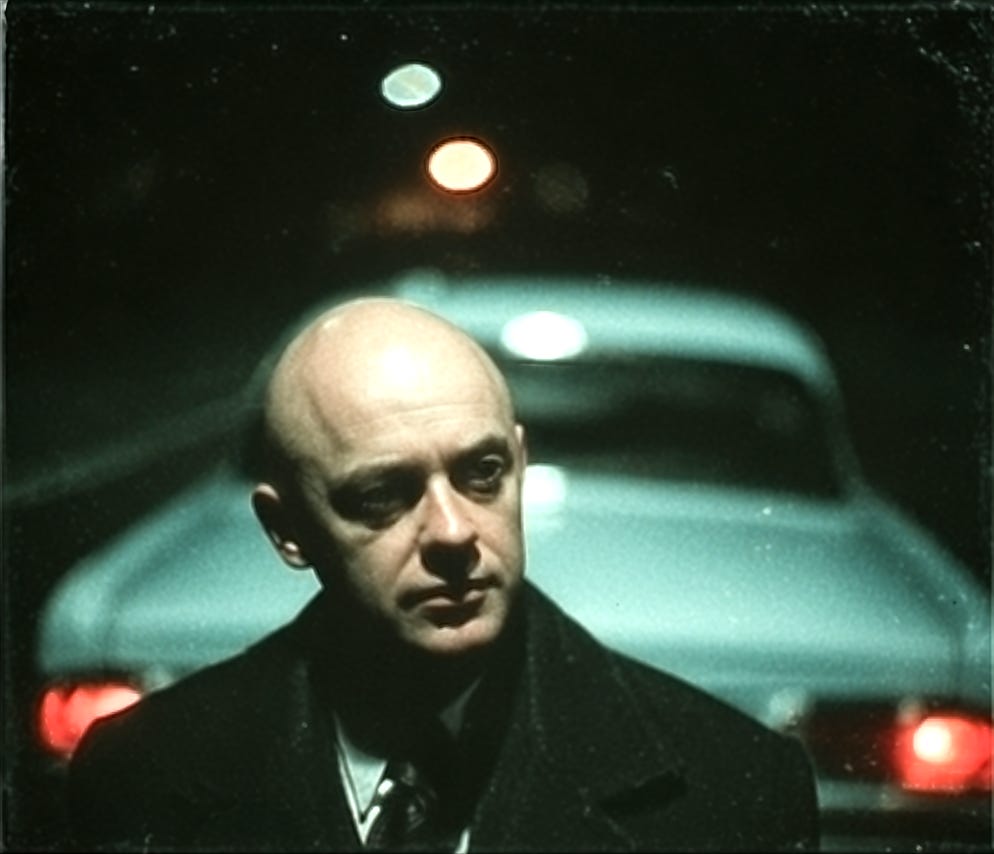
This CIA officer has never been identified, although Stockwell in his memoir In Search of Enemies left a few breadcrumbs, including how he twice encountered the man later, when the officer had been promoted to Chief of Station posts in Asia and Europe. Stockwell also gave a visual clue, describing how the man was “glisteningly bald,” who stared with “half-closed, puffy eyes” as Stockwell tried to brief him in Asia. The Chief of Station also exhibited odd behavior: “Twice during dinner he went to the tiled lavatory where he spent fifteen minutes scrubbing and drying his hands, cleaning his fingernails, and staring at himself in the mirror.” Susan Williams in White Malice suggested two potential candidates, Devlin and CIA officer David Doyle, though she noted that neither fit the profile. Regarding Devlin, there is enough photographic evidence to demonstrate that he was not bald during the time in question. For Doyle, “photographs show he had a full head of hair late into his life.” Another candidate, Eugene Jeffers, Devlin’s deputy in the Congo, also was not bald, as shown in his author portrait; he wrote two novels about Africa, A Rumor of Distant Tribes and Beyond Darkness. Jeffers later claimed that Devlin kept the assassination plot from him in order “to protect him.” Discovering the identity of the CIA officer in question requires a more in-depth search.
Spook Directory
“I know what you’re up to and I don’t want to contribute. Thank you very much!” Arthur Hummel, Acting Assistant Secretary of State, slammed down the phone on John Marks, who was working on an article entitled “How to Spot a Spook.” In the piece published in the November 1974 issue of The Washington Monthly, Marks, a former State Department employee himself, explained that most CIA operatives overseas were housed within U.S. embassies under State Department cover, often posing as “political officers,” administrative staff, or military personnel. By presidential directive, the State Department was responsible for concealing the CIA, giving its operatives diplomatic titles, offices, and immunity. In many countries, particularly in the Third World, CIA personnel equaled or outnumbered diplomats.
Marks detailed multiple ways CIA operatives could be identified: they were typically Foreign Service Reserve (FSR) or Staff (FSS) officers rather than career Foreign Service Officers (FSOs); they disproportionately held political jobs despite lacking normal diplomatic career paths; and their biographies often showed vague employment histories or prior work as “analysts” for military departments. By cross-referencing publicly available government documents such as the Foreign Service List and the Biographic Register, Marks showed how many “secret” operatives could be readily exposed. He suggested that such assignments were often known to and tacitly accepted by host nations, reinforcing the idea that secrecy was largely illusory.
Using the Foreign Service Lists against the career criteria outlined by Stockwell yields no precise matches. Employing a more in-depth search using these same catalogs, a strange, glisteningly bald man appears.
