
Just Say No
The Exception to the War on Drugs

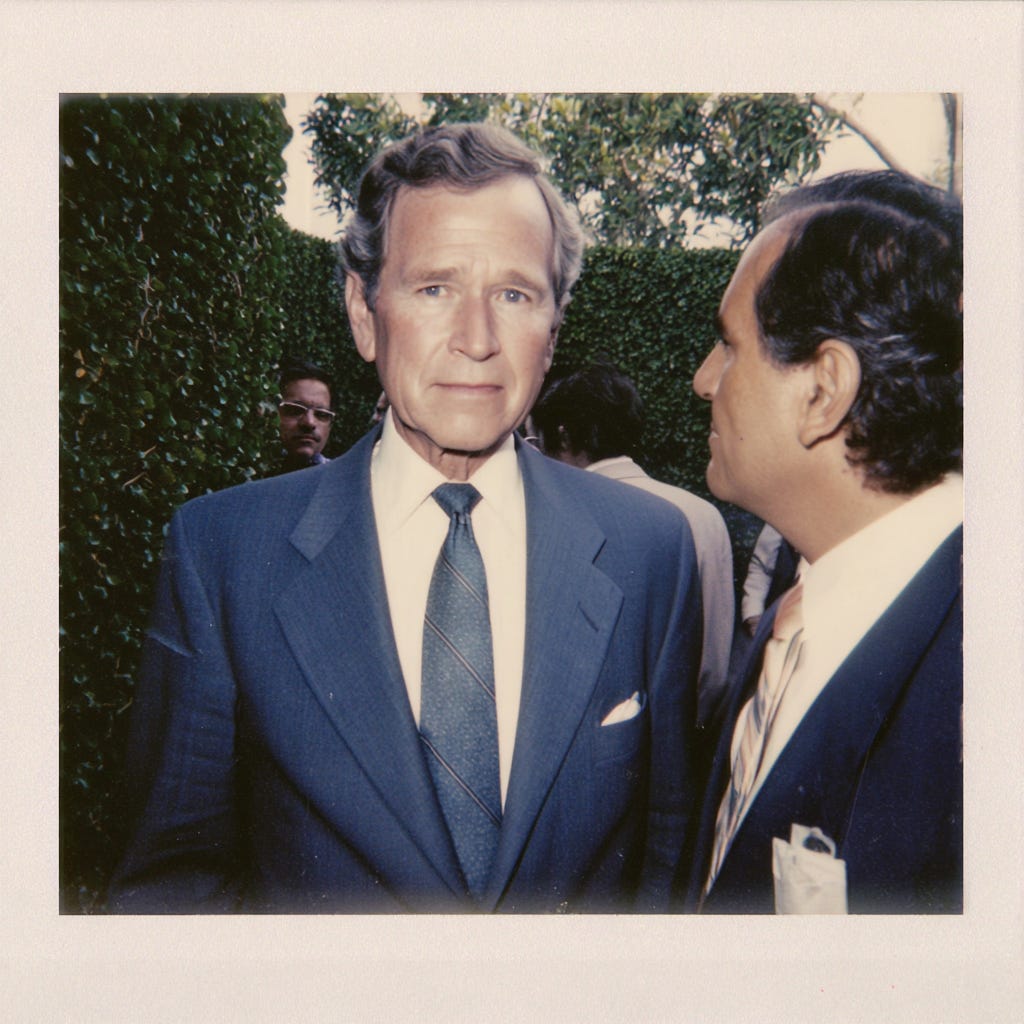
There were things he should never have seen; some deeply disturbing on a personal level, others tied to sensitive national security secrets. For Celerino Castillo III, the battle against the prime enemy in his career began in the Vietnam War. While he initially experienced Viet Cong attacks at Cam Ranh Bay in 1971, soldiers in the war also contended with another persistent enemy: the pervasive presence of drugs.
A captain walked by with a clipboard handing out roles and Castillo became a sergeant of the base’s security forces, which was a thankless job. He patrolled for 12 hours a night starting at 7 p.m. and looked to keep the guards on their toes, seeking to surprise them and hoping they would challenge his presence. There were good guards who performed as he hoped, but there were also those who would pass the time by sleeping, smoking marijuana, or taking heroin. Some of the marijuana joints would be soaked in opium and the heroin would occasionally be hidden in gelatin capsules. Castillo found soldiers shooting heroin in the latrines, their faces showing the full effect of the drug. Illegal drug use was foreign to Castillo, as he had never tried anything more serious than whiskey and beer. Once a soldier was caught three times for these infractions, he would be court-martialed. This made Castillo severely unpopular and subject to threats. A friend approached his tent one night, warning him of an overheard conversation: “They said they were going to zap you between towers 4 and 5 and blame it on the VC.” Castillo held his M16 tight as he tried to fall asleep each night, watching the shadows cast against his tent and waiting for an intruder to make good on the threat, but the shadows never budged.
Castillo grew up in Pharr, Texas, a city connected by bridge to the Mexico border. His father, a decorated World War II veteran, instilled in him a deep sense of duty and patriotism. When Castillo received his draft notice in 1970, he felt fear mixed with pride; despite his mother’s desperate attempt to intervene, his father insisted he serve, continuing the family’s military tradition. While he started in Cam Ranh Bay, he soon transferred to an infantry unit near Bien Hoa, entering the jungle war. It was an exhausting cycle of patrols and ambushes under harsh conditions.
Heroin, widely available, devastated many troops, sometimes killing more effectively than enemy fire. “Men were shooting up in the open,” he recalled. “Soldiers would pop open the capsule, tap the powder into a spoon, and add a splash of water or liquor. With a candle or a can of sterno from their C-rations, they would heat up the spoon until the heroin dissolved and bubbled, then let it cool for a moment and draw it into a syringe. Pumping a fist to coax an artery, they would plunge the needle through the skin and surrender.” Castillo viewed the zombies walking around on heroin as the weak ones who could not cope with the war: “They were 19 and going mad.”
Just before going on patrol one day, a private had received a “Dear John” letter, informing him that his young wife in the United States had found someone else. “It don’t mean nothin’,” he claimed, stuffing the piece of paper into his rucksack. The soldier had recently turned to heroin to cope with the stress and had quickly become dependent. That night, overwhelmed, he injected a dangerously large amount and died: “He started foaming at the mouth…His buddy called for a medic, but he was dead before they could pull him from the hole.” Castillo reflected coldly on the death as inevitable, viewing it as a form of “natural selection,” and noted that it was the first soldier’s death he witnessed during the Vietnam War. Marijuana was a minor escape, while heroin proved far more destructive, leading some soldiers to wander off and die from overdoses beyond the camp perimeter. The unit sometimes staged their deaths as combat fatalities, shooting “a bullet in the body,” to spare certain soldiers’ families the embarrassment, while others were sent home with their addiction evident.
Heroin was also a tool of the enemy sappers in Vietnam, fighters who used it to carry out suicidal attacks with explosives. During one patrol, Castillo’s squad was warned of approaching Viet Cong and a young sapper charged toward them. Castillo shot him and another soldier finished the wounded attacker. Although shaken to his core, Castillo felt a grim sense of satisfaction, seeing the killing as revenge for fallen comrades, especially a squad member killed earlier by a sniper: “I looked into this boy’s dead eyes and felt my muscles relax. My anger finally had its sacrifice.”
Watching overdose deaths and bodies being shipped home in green bags every week deepened Castillo’s anger toward drugs and shaped his resolve to fighting drug abuse if he managed to make it out of the war alive. After returning from a month in the jungle, Castillo collapsed from exhaustion and was haunted by recurring nightmares, especially of the young sapper he killed and one involving his own death in battle. Sleep offered little relief, as many soldiers suffered similar trauma, sometimes waking up screaming. On the rare occasions he dreamed of home, the vision would be shattered by his current reality: “Shit, I’m still in Vietnam,” he muttered to no one after being awakened by a nearby mortar attack. Overwhelmed by fear, exhaustion, and the emotional strain, he broke down and cried for the first time since childhood.
Convinced he would die in Vietnam, Castillo wrote home urging his parents to prepare for the worst. During a mission to reinforce the Rangers who were “getting thumped in a firefight,” his overcrowded helicopter suffered a catastrophic accident when a grenade was accidentally triggered, killing many and sending the aircraft crashing into a river. Castillo narrowly escaped before the helicopter exploded; he was one of only two survivors. As he searched the wreckage for signs of life, he discovered a sergeant floating in the water who appeared unharmed. Maybe he’s just gone into shock, he thought. Pulling the man out of the water, a feeling of nausea overwhelmed Castillo once he realized the truth: “His face was just a mask—the back of his head was missing.”
Castillo and his company, exhausted after a long jungle patrol during the 1972 monsoon season, were unexpectedly called together and asked to volunteer for covert missions in Cambodia. The captain recruiting volunteers offered the following caveat: “If you get caught out there, as far as the Army is concerned, you were never there.” Castillo volunteered, having already come to terms with the possibility of death after surviving the helicopter crash. He became part of a six-man sniper team tasked with secretly crossing the border to eliminate village organizers and enemy leaders supporting opposing forces.
Operating mostly at night, the team infiltrated villages, observed daily life to identify leaders, and carried out precise killings before slipping back into the jungle. Their missions were tense and dangerous, including a close encounter with enemy troops that forced Castillo to remain perfectly still to avoid detection: “I did my best to become one with a thick bush, ignoring the ants crawling inside my fatigues for a free meal.” These covert operations, which officially never occurred, continued repeatedly through early 1972. Over time, Castillo learned to trust his instincts for survival, relying on subtle warnings of danger as he carried out the remainder of his tour in special operations.
As U.S. troop levels declined in Vietnam, Castillo’s tour was cut short. He left behind the bayonet he had taken from the fallen sapper and his memories of the names of the men he served with; only his photos remained. In April 1972, he departed on a “freedom flight,” cheered by some comrades and watched somberly by others; for them, the long conflict was still continuing.
DEA
Back in his old room Pharr, Texas, life outwardly resumed its familiar rhythm, but Castillo felt permanently changed. He kept his war experiences largely to himself, unable to share them with family. He received the Bronze Star and enrolled in criminology at Pan American University. While studying, he worked nights as a police dispatcher and gradually committed himself to a career in law enforcement, driven partly by what he witnessed in Vietnam.
By 1975, Castillo became a police officer in Edinburgh, Texas. His work began with routine small-town crime, but he soon grew interested in narcotics enforcement, seeing drugs increasingly flow through the Rio Grande Valley. Collaborating with Drug Enforcement Administration (DEA) agents, he developed informants and participated in cross-border investigations, gaining firsthand exposure to corruption and brutality among Mexican federal police, where torture was routinely used to extract confessions. “The unlucky and the uncooperative were hung from a beam,” he remembered, “doused with water and jolted with a battery powered cattle prod, which buzzed menacingly before biting into their damp skin. The police called it chicharra. The cicada.”
His dedication to narcotics work led him to apply to the DEA and after years of waiting, he was accepted in 1979. Almost immediately, however, his commitment was tested when he discovered his girlfriend’s stepfather was a drug trafficker. Despite the personal conflict, Castillo helped build the case that led to the man’s arrest. He became disillusioned with internal conflicts and questionable practices within the local DEA office, including poor handling of informants and rivalry among agents. Assigned unexpectedly to New York City, he left Texas and his girlfriend Noe behind, determined to prove himself in what he saw as his true calling, the escalating war on drugs.
NYC
Arriving in Manhattan in 1980, Castillo felt isolated and overwhelmed by the city’s intensity, which was far more disorienting to him than even Vietnam. He was assigned to the DEA’s largest division, he struggled to adapt to an unfamiliar environment, a tiny apartment in Queens, and loneliness far from home. He felt like quitting soon after meeting his supervisor Jeff Hall, who told him: “The first thing you have to do is get rid of that hat. The only people who wear cowboy hats here are queers.” Encouraged by his father, Castillo gradually decided to stay and learn the trade.
Over time, Castillo adjusted to New York life, building friendships within law enforcement, developing a love-hate relationship with the city, and gaining mentorship from experienced agents. Hall, his supervisor, made the news for testifying during a 1982 court case involving a cocaine trafficking investigation and tennis star Vitas Gerulaitis. As part of “Jeff’s Raiders,” a notoriously aggressive enforcement group, Castillo participated in frequent raids and street-level operations that sometimes included illegal searches and seizures. “We did away with reading their rights…We simply tossed them in jail for a night and took another ounce or kilo off the streets.” Putting aside their DEA training, Hall would lead the charge of agents with their .357 revolvers drawn, kicking down doors and yelling, “Hit the floor!” They once scared a pet dog “so badly it jumped through a window and dropped six stories to its death.” Although troubled by these practices, he suppressed his doubts, driven by his vow to fight narcotics and by the excitement of meaningful action. Hall himself had grown cynical: “The system doesn’t work,” he once explained to Castillo. “You’ll arrest those bastards and they’ll be out the next day, back on the streets.”
The expanding drug crisis of early-1980s New York, including the rise of cocaine and crack and the persistence of heroin networks, led to Castillo witnessing harrowing scenes of addiction and exploitation. One bust he conducted while undercover disturbed him for decades. “Is this good stuff?” Castillo asked while posing as a buyer. The drug dealer, “decked out in gold and silk,” brought out two underage girls who looked no older than 14. “These are the girls who test my stuff,” he said as he passed syringes to them. Castillo recalled what happened next: “The girls stripped from the waist do smiling in anticipation. My jaw went slack as they plunked do in chairs and spread their legs, expertly guiding needles to the large vein in their groins. Their heads lolled dramatically as they testified to the heroin’s quality with thick tongues.” Shocked and horrified, Castillo completed the buy and reported the situation to fellow agents. The dealer was violently arrested; the exploited girls were removed and taken to a shelter. As he continued to witness disturbing scenes and illegal actions on the part of the DEA, Hall took him aside, saying “Look, Cele, this is the way we do things. We’re a real close-knit group; we keep to ourselves.”
Castillo began proving himself through increasingly complex undercover work, including his first major solo case against a neighborhood cocaine dealer and pioneering use of the DEA’s “reverse” sting technique, posing as a seller to catch higher-level traffickers. His career advanced further during a long investigation into a major heroin trafficking network linked to organized crime families. Working with his partner Gerald Franciosa, Castillo helped infiltrate the operation through wiretaps, informants, and undercover work. After months of surveillance, the investigation culminated in a large, coordinated bust in 1982 that dismantled a major heroin ring and resulted in multiple high-profile convictions. Francis M. Mullen, the DEA Administrator, testifying before the President’s Commission on Organized Crime in 1983, indicated that the “18-month investigation culminated in the indictment of 28 narcotic traffickers…Convictions and significant sentences were given to the majority of the violators. Spin off investigations resulted in the disruption of three additional major international heroin smuggling organizations operating between Italy and the United States.”
Peru
Following the operation, his longtime partner Noe visited New York; Castillo proposed marriage and the pair were wed. After the birth of their first child, Castillo and his family moved to Lima, Peru, in 1984, where they initially experienced a brief sense of peace and stability in a guarded diplomatic enclave. Peru stood at the center of the global cocaine trade, its vast coca-growing regions feeding the rising demand for cocaine in the United States. Castillo arrived determined to confront what he saw as the heart of the drug supply.
Assigned to a small DEA office in Lima, Castillo was soon deployed into the Huallaga Valley, the core of Peru’s coca economy, where he worked alongside the Guardia Civil and their anti-narcotics unit (UMOPAR). In the dense jungle around Tingo María, Castillo hunted small coca-processing labs, burning crude facilities and disrupting local operations. He realized these actions barely affected the larger cocaine system: poor peasants grew coca to survive, while powerful Colombian cartels controlled production, airstrips, and profits. Corruption permeated the region, with military officers, police, and the guerrillas benefiting from cocaine money. Castillo was frustrated as low-level farmers suffered punishment while major traffickers remained untouched.
Castillo joined a group of Guardia officers on a mission to locate a suspected drug lab in the hills. Along the way, they discovered an abandoned camp marked with symbols of a guerrilla group and soon encountered the mutilated bodies of six men hidden in the brush. The horrified informant recognized the victims: “That’s my uncle,” he commented, pointing to a body. He then identified another corpse: “That’s my cousin.” They apparently had murdered as a warning. Fearing for their lives, the team abandoned the mission and retreated. The event deeply affected Castillo, intensifying his fears about the danger surrounding him and stirring guilt over the toll his work was taking on his family, his wife now pregnant with their second child.
The fear intensified when DEA agent Enrique “Kiki” Camarena was tortured and murdered in Mexico in 1985, forcing Castillo to question whether the mission was worth the risk. Investigators found an audio tape of his final moments, with Camarena heard begging his captors: “Don’t hit me anymore!” Concerned for his family’s safety, Castillo eventually sent Noe and their daughter back to the United States.
Working with the CIA, and Peruvian and Colombian police, Castillo helped plan a raid on a remote jungle airstrip and drug compound in the Callaru region. As he looked at the eager officers around him in his helicopter, Castillo realized “none of these men had participated in an air assault.” He hoped they could “keep their heads” if they happened to be attacked by the drug traffickers. The journey flying over the treetops reminded him of Vietnam, except here there were thousands of macaws blanketing the sky as the helicopters flew nearby. “They were so close I was tempted to reach through the open hatch to touch one,” he recalled.
As the helicopters approached the airstrip, the traffickers opened fire from a distance, and Colombian and Peruvian forces returned fire while closing in. From the air, Castillo’s team spotted two boats fleeing along the river; one escaped into the trees while the other was damaged by gunfire before disappearing toward the riverbank. Castillo and the others landed, advanced along the runway, and secured the area, but the traffickers had already fled into the jungle. Castillo conducted a headcount that confirmed that none of his team had been wounded. The team discovered a vast cocaine operation that included laboratories, aircraft, weapons, and large quantities of coca paste.
Castillo organized the perimeter through a tense night that featured sporadic gunfire from his team. Castillo questioned the men as to why they were firing into the darkness. “I saw them,” an officer explained, pointing to the jungle. “They’re out there,” a fellow officer confirmed. “Did they return fire?” Castillo asked. “No,” they replied. “Then don’t fire unless you’re fired upon,” Castillo insisted. The next morning, Castillo took the men to the area where they had fired, finding the bodies of four monkeys, after which “their buddies burst into fits of laughter.” Castillo summarized the value of the operation: “The Peruvian government estimated the compound’s value at $500 million. It was the biggest cocaine lab capture in South American history.” According to the Los Angeles Times, the operation uncovered six cocaine laboratories, including a large, sophisticated “super-lab” capable of producing about 300 kilograms of cocaine per day. “If the narco traffickers are smart, and nobody said they are dumb,” a Colombian air force general told the press, “they will not put another big lab that close to the Colombian border again.”
Guatemala
A new assignment for Castillo involved a transfer to Guatemala City in October 1985. As his plane crossed into Central America, Castillo anticipated there would be suspicion and hostility from the Guatemalans, where resentment toward past U.S. policies still lingered. He recalled the 1954 CIA-backed coup that overthrew Guatemalan President Jacobo Árbenz after his land reforms threatened U.S. corporate interests. In the decades that followed, Washington supported a succession of right-wing regimes that brought brutal repression. By 1985, a newly elected civilian president, Vinicio Cerezo, promised democracy, but real power still rested with the military establishment. Castillo quickly recognized that U.S. operations, including his own, ultimately depended on the goodwill of Guatemala’s armed forces.
Upon arrival, Castillo met his superiors in the small DEA office, including country attaché Bob Stia and agent Russell Reina, whose flamboyant appearance contrasted with his cautious approach to fieldwork: “Everything about Reina cried out for attention. Gold everywhere—pinky rings, bracelets, and a 50-peso gold medallion hanging around his neck. At first I thought Reina had just come from an undercover assignment and left his doper clothes on, but I soon realized it wasn’t an act—he really dressed that way.” The office was severely understaffed and responsible for four countries amid rising instability following the murder of DEA agent Camarena in Mexico. Castillo was assigned to oversee aerial eradication missions targeting marijuana and opium poppy crops in the Guatemalan highlands, a program with limited impact but symbolic value. Early experiences in Guatemala exposed him to the informal intelligence networks used by U.S. personnel, including reliance on local informants and brothels as sources of information.
Stia and Reina took Castillo to one such brothel in an upscale neighborhood in Guatemala City. After passing through heavy security, they entered an establishment run by a woman named Maruja that catered to wealthy clients. Castillo observed the lavish décor and noted that the girls looked no older than 18 and “sat up expectantly, waiting for a signal to do business.” Castillo chose as his companion a “Chinese girl with long black hair…Her black silk dress cut into a low V in front, showing her bare breasts when she leaned forward.” She appeared to be around 16 years old and described how she had come to Guatemala from Taiwan and used the money she earned to support her parents and family back home. Reina told him that for $25, he could bring her back to his room for the night. Castillo left instead, “too tired for anything but sleep.”
A Dark Secret
Through receiving briefings at the U.S. Embassy, Castillo learned more about the political landscape in Central America. In Guatemala, the military dominated despite the façade of democracy; in El Salvador, a brutal civil war persisted accompanied by massive U.S. aid. Violence, kidnappings, and repression were routine, and U.S. policy focused as much on geopolitical strategy as on narcotics enforcement. Castillo observed that the DEA’s role in the region was limited and more focused on gathering intelligence and avoiding political complications than on making arrests. It was in El Salvador that Castillo uncovered a secret the U.S. government tried to conceal, one that shattered his view of the drug war.
