
Liquid Affairs
The International Bureaus of Assassination

As part of their assassination mandate, a group of scientists from the British intelligence agencies once gathered in the 1950s for a disturbing demonstration at the research facility Porton Down in Wiltshire, England. Peter Wright, an MI5 scientist, was there to view a new weapon developed for the sister organization MI6. The visitors put on white lab coats and were taken to an outside compound where animal testing regularly took place. Wright and the others watched as a sheep on a leash was led into the middle of a ring. Part of its side had been shaved, revealing a pink underbelly. A lab assistant brought out a cigarette pack, which had been modified to shoot poison darts. He saw the sheep get startled and pull on the leash, but he thought that the device had misfired as nothing else seemed to have happened. Soon afterwards, however, the animal’s knees buckled and its eyes rolled around; the sheep’s mouth was now frothing. The animal fell to the ground and died a slow death, while the scientists proceeded to discuss the applications of this new toxin. Wright’s conclusions were two-fold: (1) between intelligence work and animals, his love for animals far outweighed his passion for his job; and (2) “assassination was no policy for peacetime.”
Stopping an Assassin
When William C. Sullivan, an Assistant Director at the FBI, received word in the 1960s from an informant that a man in the KGB’s assassination squad was on his way to Washington, D.C., he believed there was no choice but to try to entrap him. The informant, having successfully been recruited by the Bureau months before, reported that the assassin was being assigned to the Soviet Embassy under cover as a businessman looking to buy aluminum to be shipped to Russia. The FBI set up a fake company and pitched an aluminum business venture to him, expressing an interest in meeting him, which he accepted.
The meeting, which took place in a Washington hotel room, was going well. Two fake FBI businessmen offered the assassin some metal for purchase at a price well below market value. The price could be dropped even further, they offered, if the Russian would explain his “real business” of why he was in the United States. The Russian stared at the other two men carefully, before declaring, “You’re FBI!” and running towards the door. One of the agents blocked him as he reached the doorway, punched him straight in the face, and put him back in his chair. After further interrogation, the assassin would not admit to being anything more than a purchaser of aluminum. “Get the hell out of this country, and fast!” the FBI agents instructed him. Once the assassin reached the door, he gave a warning to the agent who had punched him: “You redheaded son of a bitch, when we take over, you’re going to be the first man I kill.” Instead, the Russian returned to Moscow by plane on the same day.
Despite their ability to mitigate the risk in this case, Sullivan worried that the KGB had been successfully in other instances in assassinating Russian defectors under the control of the FBI. Sullivan was certain that one particular defector, run over by a car after he had been killed in New York City, was a victim of a KGB hit. Another Soviet army defector was murdered in a Washington, D.C. hotel room and was another case that Sullivan believed fit the bill. In 1964, the CIA in 1964 wrote a summary of the Soviet KGB's long-standing use of assassination and kidnapping—referred to as “executive action” or “liquid affairs”—to eliminate real or perceived threats to the regime. These methods were employed both within the U.S.S.R. and internationally, targeting Soviet citizens, émigrés, and foreign nationals. The practice dated back to the early days of the Soviet state, which included Leon Trotsky among its victims, and continued under Nikita Khrushchev’s leadership.
In the FBI’s intelligence work to counter the KGB’s actions, there was no authority that could rein them in, if they could find a personal justification on which to hang their hat. Even FBI Director J. Edgar Hoover’s disapproval of their proposed actions meant nothing. After Hoover refused to grant permission on a surveillance operation against two Russian agents in Philadelphia who happened to be U.S. citizens, Sullivan allowed the team to construct their own microphone to record the couple’s presumed treachery in their apartment. After the recordings began, Sullivan continued to pursue approval from Hoover and when he finally succeeded, the agents simply “replaced our own microphone with a better one from the FBI inventory,” he recalled.
Sullivan also recounted how FBI agents mercilessly beat another KGB asset, Nelson Cornelius Drummond, as well as his associates, “just for good measure,” despite their lack of resistance being arrested. The FBI used sex for the purposes of recruiting KGB officers to become double agents, whether through capturing compromising photographs for sexual blackmail or using prostitutes in their employ; the latter assets were “not the regular payroll, however,” Sullivan clarified, “we had a special fund for this type of work.” One Soviet code clerk was targeted because he had direct access to all of the sensitive information that the Soviet Ambassador received; Sullivan’s team learned he “wanted to ‘experience’ a black woman…we saw to it that he met a black woman who was on the payroll…of the FBI.”
Junior vs. Senior
In the late 1950s, relations between British and U.S. intelligence agencies were severely strained. The Suez Crisis had caused a near-total breakdown in cooperation between MI6 and the CIA, with growing conflicts across multiple global regions. MI6, once dominant in the Anglo-American intelligence partnership, was struggling to accept its reduced role. MI5’s relationship with the CIA was also tense, driven by the CIA’s aggressive global expansion and its disregard for protocols in London. Distrust was deepened by the high-profile defections of Guy Burgess and Donald Maclean from the U.K. to the Soviet Union and the temporary public exoneration of suspected spy Kim Philby, which damaged MI6’s credibility and made MI5 appear inept in the Americans’ eyes. Only the U.K. Government Communications Headquarters (GCHQ) maintained strong ties with the U.S. National Security Agency (NSA) due to a formal cooperation agreement.
During a visit to FBI headquarters, MI5 scientist Peter Wright observed the unwavering loyalty of senior FBI officials like Al Belmont and William C. Sullivan to Director J. Edgar Hoover. Wright found it strange that these officials never acknowledged Hoover’s autocratic tendencies: “everyone knew Hoover suffered from God disease,” Wright later wrote, “and it seemed odd to me that they never acknowledged the fact, even privately.” After spending the day discussing surveillance techniques with Belmont and Sullivan, Wright was taken to meet Hoover in the antiseptic, clinical atmosphere of FBI headquarters. The sight of men continually polishing and painting the already spotless workplace was the sign of an “unclean mind,” according to Wright. Hoover appeared stern and intimidating, interrupting and dominating the conversation: “Your security organizations enjoy many facilities here in Washington, Mr. Wright,” he said in a threatening tone. “I have to advise the President of the United States when those facilities raise questions about our national security. I have to take a close personal interest in a case like this, particularly in view of the recent problems the United Kingdom has suffered in this area. I need to know I am on firm ground. Do I make myself clear?”
Hoover questioned Wright aggressively about British security failings, particularly in light of recent scandals such as the Burgess and Maclean defections, and implied that continued British access to U.S. intelligence facilities was contingent on tighter security being implemented on the part of the U.K. Hoover dismissed Wright’s attempts to explain, instead delivering a forceful monologue on the importance of unwavering vigilance against Communist threats. “Now in the Bureau here, Mr. Wright, that sort of thing could not happen. My officers are thoroughly screened. There are lessons to be learned. Do I make myself clear?” Wright nodded. Throughout the meeting, Belmont and Sullivan sat quietly on one side of Hoover’s desk, half-hidden in the shadows: “I was on my own,” Wright thought.
The day after, Wright met with James Angleton, the CIA’s Chief of Counterintelligence. Wright admired Angleton’s intellect and deep commitment to winning the Cold War, although Angleton had a reputation for paranoia and manipulating the rivalry between MI5 and MI6. “How was Hoover?” Angleton immediately asked, sitting at a restaurant table holding a Jack Daniel’s and cigarette. Wright was impressed: “You’re very well informed today, Jim.” Angleton’s gaunt face creased into a large smile. After Wright explained he was just “making friends with the Bureau,” Angleton dismissed this effort as “a waste of time. You’ve been trying to get in with him since as far back as I can remember. He always tells us he can’t stand the Brits.” Wright countered that he did not find the CIA to be much friendlier. “People like Hoover,” Angleton explained, “they look at Burgess and Maclean, and they look at the state of MI5, and they say, ‘What is the point?’”
Wright offered his own situation as proof of the change happening at MI5: “Ten years ago they would never have appointed me as a scientist. But I’m there now, and new people are coming in all the time.” Angleton was still dismissive and sarcastic: “I went to an English public school. I know the score with you guys.” Although Angleton was evasive and offered little support, he questioned Wright intensively on sensitive topics, including suspected Soviet spy Philby and businessman Armand Hammer, asking for the latter’s MI5 file. Wright was not about to hand over the Occidental Petroleum chairman’s file: “We’re friends, Jim, but not quite that close, yet!” At around 5:00, Wright walked Angleton back to his Mercedes-Benz. Angleton had locked his keys inside the car and Wright promptly pulled out of his pocket a lock-picking wire; he opened the door within 30 seconds. Angleton appreciated the help: “Not bad, Peter, not bad!” Wright continued to press him for cooperation between Britain and the U.S.: “I am serious. If you won’t help me in Washington, I’ll find someone else who will.” Angleton muttered: “I’ll see what I can do,” and drove off without a glance in Wright’s direction.
Lonsdale
As Wright was listening to a surveillance target one evening, he reached for the audio controls and muted the subject, “as the sound of their passionate lovemaking filtered through to us.” An investigation into a suspected spy, initially believed to be linked to Polish intelligence, had quickly escalated into the exposure of a major Soviet espionage operation. British intelligence began tracking naval clerk William Houghton, who regularly met with a man in London later identified as “Gordon Arnold Lonsdale”—a false identity used by a KGB agent, whose real name was Konon Molody.
Surveillance of Lonsdale revealed a playboy lifestyle masking his covert activities. His office and flat were bugged, and he was watched meeting Houghton and his accomplice, Ethel Gee. When Lonsdale left for a trip, MI5 secretly accessed his bank deposit box and uncovered a cache of classic espionage tools, including miniature cameras, secret writing materials, cipher pads, and map references. The discovery of Soviet one-time code pads confirmed Lonsdale’s KGB ties. Using Project RAFTER, which detected radio receiver use, MI5 monitored Lonsdale’s flat to determine his communication frequencies. They carefully copied the cipher pads without detection, using custom glue based on a Swiss pad sample for reassembly.
However, RAFTER surveillance (codenamed LIONSBEARD) revealed that the Soviet Embassy had activated receivers during the exact times MI5 was removing Lonsdale’s suitcase—strongly suggesting a mole was leaking MI5 operations to the Russians. This discovery triggered a major internal investigation and shifted the case from Polish to Soviet counterintelligence oversight within MI5. The operation was disrupted when the CIA informed them of an imminent defection from “Sniper,” a confidential source likely from the Polish Intelligence Service. Fearing exposure, MI5 swiftly planned and executed the arrests of Lonsdale, Houghton, the Krogers, and others.
The arrests were logistically complex, and although MI5 sought a media blackout, leaks occurred, and the press soon reported the espionage ring’s takedown. The search of the Krogers’ house revealed extensive spy equipment, including cipher pads, secret writing materials, and a hidden transmitter under the kitchen floor, confirming their involvement in Soviet intelligence operations. Wright was later invited to speak to the CIA on this technology used in the operation, with an unexpected reaction from his counterintelligence counterparts.
CIA Hecklers
MI5 agreed to share information regarding their RAFTER technology given that the CIA’s assistance from “Sniper” had helped the Lonsdale case. Wright was surprised by the large audience that showed up for his speech, estimating that there were at least 200 CIA officials in attendance. At first, Wright was concerned about security protocols: “Are you sure all these people are SIGINT indoctrinated?” he asked Angleton, who replied nonchalantly: “Just tell the story, Peter, and let us handle the security. There’s a lot of people want to hear this!”
Over the next hour, Wright worked to keep his stutter under control and described the Lonsdale case in detail. Next, he turned to outlining the RAFTER technology: “Of course, from our point of view,” he told the CIA personnel, “RAFTER represents a major new counterespionage weapon. We are now in the position to establish without question when Soviet agents in the field are receiving clandestine broadcasts from Moscow, and moreover we can use it to detect the frequency of their transmissions...” He could hear murmuring throughout the crowd and grew concerned when he saw CIA officer William K. Harvey speaking to Angleton and gesticulating angrily in Wright’s direction. Wright asked the audience if they had any questions. “Yes!” came a voice at the back of the room. “When the hell did you say you developed this RAFTER?” Wright replied: “Spring 1958.” The man responded: “And what the hell date is it today?” Wright began to stutter. The man continued: “I’ll tell you, it’s 1961!” Another man commented: “Hell of a way to run an alliance.” Wright was then quietly pulled aside by Angleton, who suggested a private follow-up discussion over dinner at a private home in the Virginia countryside.
At the supper, Angleton at first offered a brief apology: “Sorry about this afternoon,” with no further commentary. Harvey came bursting through a mosquito door brandishing a bottle of Jack Daniel’s. “Now you limey bastard,” he yelled, slamming the bottle on the table, “let’s have the truth about this case!” Harvey accused the British of betrayal for withholding the information while seeking U.S. funding and support. Angleton was more composed but expressed concern that if the Soviets had acquired similar technology, it could have compromised American operations, especially in Poland. Wright shared evidence suggesting the Soviets may indeed have developed or learned about RAFTER, further alarming the Americans. “You untrustworthy motherfuckers!" Harvey roared. “You come over here and ask for us to pay for your research, and all the time you’ve got a thing like RAFTER up your sleeve...” Wright was perplexed: “I don’t see the problem…” Harvey retorted: “You don’t see shit!”
The meeting devolved into a tirade from Harvey, who lashed out at Britain’s intelligence failures and what he saw as its declining global relevance. Wright defended his position, arguing that the British had no obligation to share RAFTER early on and that the Americans had shared little in return. Harvey wondered: “Who else knows about RAFTER?” Wright revealed that the FBI and the Royal Canadian Mounted Police had been informed of its existence. “The Canadians!” Harvey exclaimed, hitting the table with his fist. “You might as well tell the fuckin’ Papuans as the Canadians!” Angleton calmly explained how the Brits would need to accept American superiority if they were to gain access to their secrets. Harvey was more blunt: “Just remember, you’re a fuckin’ beggar in this town.” The encounter ended in the early morning hours, with Wright walking out, refusing further engagement.
The next day, Angleton visited Wright to apologize, blaming Harvey’s outburst on his drinking and aggressive interrogation style: “He drinks too much, and thinks you have to give a guy a hard time to get the truth. He believes you now. He sees you as a threat, that’s all.” Angleton invited Wright to another dinner and expressed understanding and support for Wright’s work. He offered to help by securing U.S. resources and arranged a meeting with Louis Tordella at the NSA. There, Wright explained the limitations in intercepting Soviet radio signals despite the breakthroughs from the Lonsdale case. Tordella was impressed and committed to providing 100% global radio traffic interception for two years, dramatically enhancing the effectiveness of Wright’s RAFTER-related work. Angleton later informed Wright that Harvey wanted to meet again—not to argue, but to seek Wright’s advice: “He's got a problem in Cuba, and I told him you might be able to help.”
Assassination Consultation
Despite his initial skepticism, Wright agreed to take the meeting. This time, Harvey was civil and professional, asking Wright about his experience with the MI5 campaign against EOKA guerrillas in Cyprus during the 1950s. Harvey hoped Wright’s experience could help him assassinate Fidel Castro from Cuba in the aftermath of the CIA’s failed Bay of Pigs invasion. Wright recounted how, despite early government resistance, he developed a plan to locate and neutralize EOKA leader Colonel Georgios Grivas through intelligence-led methods, rather than relying solely on military action. The plan, codenamed SUNSHINE, aimed to pinpoint Grivas’ location, leading to a military confrontation that would likely end with his death. “It would be too crude to say that SUNSHINE was an assassination operation,” he later wrote. “But it amounted to the same thing.” Wright emphasized how intelligence, if used properly, could be more effective than brute force in such insurgency situations.
Harvey focused on the parallels between the guerrilla conflicts in Cyprus and Cuba. He was intrigued by Wright’s analysis of EOKA’s reliance on its leader, Grivas, and drew comparisons to Fidel Castro’s dominance in Cuba. Harvey asked: “What would the Brits do in Cuba?” Wright, cautious of being seen as speaking for the British government, emphasized he was speaking off the record. He suggested political isolation of Castro but was hesitant about assassination, pointing out that the U.K. was no longer involved in such operations, especially after the failed Suez Crisis. This led to a detailed discussion of MI6’s aborted plan to assassinate Egyptian President Gamal Abdel Nasser using nerve gas during Suez, a plan Wright had been consulted on in a technical capacity. The idea had been to put canisters of the gas in the ventilation system of Nasser’s headquarters, which would have resulted “in massive loss of life among Nasser’s sta ff.” A second plan, according to Wright, “using renegade Egyptian offi cers, was drawn up, but it failed lamentably, principally because the cache of weapons which had been hidden on the outskirts of Cairo was found to be defective.”
Wright described MI5 and MI6’s joint work in chemical and biological research at Porton Down, including experiments with LSD and poisons. He shared a chilling account of his experience watching a poison dart hidden in a cigarette packet being tested lethally on a sheep. Harvey, meanwhile, was clearly looking to develop a CIA capability for plausibly deniable assassination operations and seeking technical expertise. Wright deflected, suggesting the CIA try the French or retired British operatives, reiterating how the British security services were out of the assassination business: “We’re not in it anymore, Bill. We got out a couple of years ago, after Suez.”
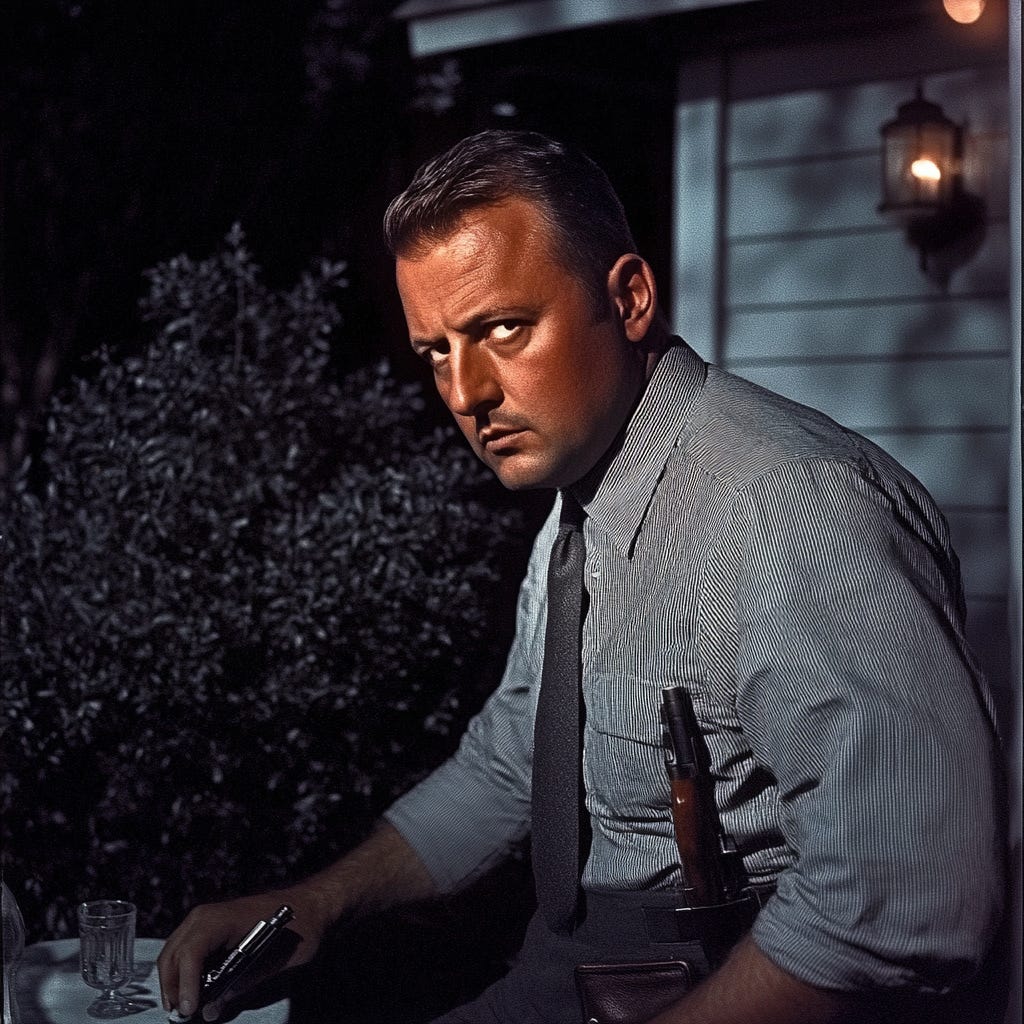
Wright became increasingly uncomfortable with the intense interest shown by Harvey and Angleton in covert operations against Castro. As the conversation wound down, Wright sensed he had already shared too much, particularly as Angleton continued taking detailed notes. The Americans appeared frustrated that he could not offer more concrete assistance. Attempting to deflect further inquiries, Wright suggested they speak to MI6 officers, offering the names of John Henry and Peter Dixon. As they parted ways on the street, Harvey pointedly asked: “You’re not holding out on us over this, are you?” As he hailed a taxi to leave, Wright could see the shape of Harvey’s concealed pistol in his holster. Wright firmly repeated once more that Britain was no longer engaged in assassination operations. His parting remark was: “We’re the junior partner in the alliance, remember? It’s your responsibility now.” Wright realized soon after he spoke that both Harvey and Angleton were not the kind of men to laugh at a joke.
Preserving the Cut-Out
Mr. Schwartz: When we talked this morning, you gave your views about the desirability of assassination as a technique on behalf of the United States. You’ve recounted some of those this morning. You said that first, we have problems because we are not as resolute or as secret as the Soviets.
Mr. Harvey: Or as ruthless.
Mr. Schwarz: Or as ruthless.
Mr. Harvey: At least, I would hope we are not.
-Testimony of William K. Harvey, June 25, 1975
In his 1975 testimony before the U.S. Senate Church Committee, Harvey provided an obfuscated perspective on “executive action,” a term he defined as actions taken to eliminate or neutralize a target, often synonymous with assassination. Drawing from his experience during the Cold War, particularly in Berlin, Harvey described the Soviet Union's frequent use of assassination, torture, and kidnapping against its enemies, including defectors and rival intelligence agents. He noted that while the Soviets were ruthless and largely unconstrained, Western intelligence services, including the CIA, generally refrained from assassinating each other's officers—not necessarily out of ethics, but out of pragmatic self-protection.
Harvey emphasized that the U.S. was less capable of conducting assassinations compared to the Soviets, lacking the necessary ruthlessness, secrecy, and organizational capacity. He warned against entering a “tit-for-tat” assassination game with the Soviets, comparing it to “a contest with a skunk.” Harvey acknowledged the moral and strategic gravity of assassination, stating it could be justified only in extreme cases—such as protecting national security or in ethical instances of treason—but insisted it must be ordered at the highest level and executed with utmost discretion. He testified about being approached by the CIA’s Deputy Director for Plans Richard Bissell in 1961 with a specific request regarding asssassination: “the thrust of what Bissell said was…‘I have been charged by the White House with the development of an Executive Action capability. Will you please survey it and see what you can do about it and tell me what you can do about it.” Harvey told the U.S. Senators he had concluded that the CIA lacked both the personnel and operational conditions to conduct such actions effectively and securely and summarized that the only “right” way would be for one senior officer to carry out the act alone and erase all evidence.
The Church Committee’s report on assassinations emphasized the need to distinguish between broad, aggressive foreign interventions and the deliberate, targeted killing of individual leaders. While the CIA was never publicly blamed for killing a foreign leader, there was an assassination the Agency had carried out for which their full involvement had to be suppressed from the public record.
