
Beholden and Vulnerable
The Forgotten 1979 Senate Report You Are Still Not Allowed to Read - Part 2

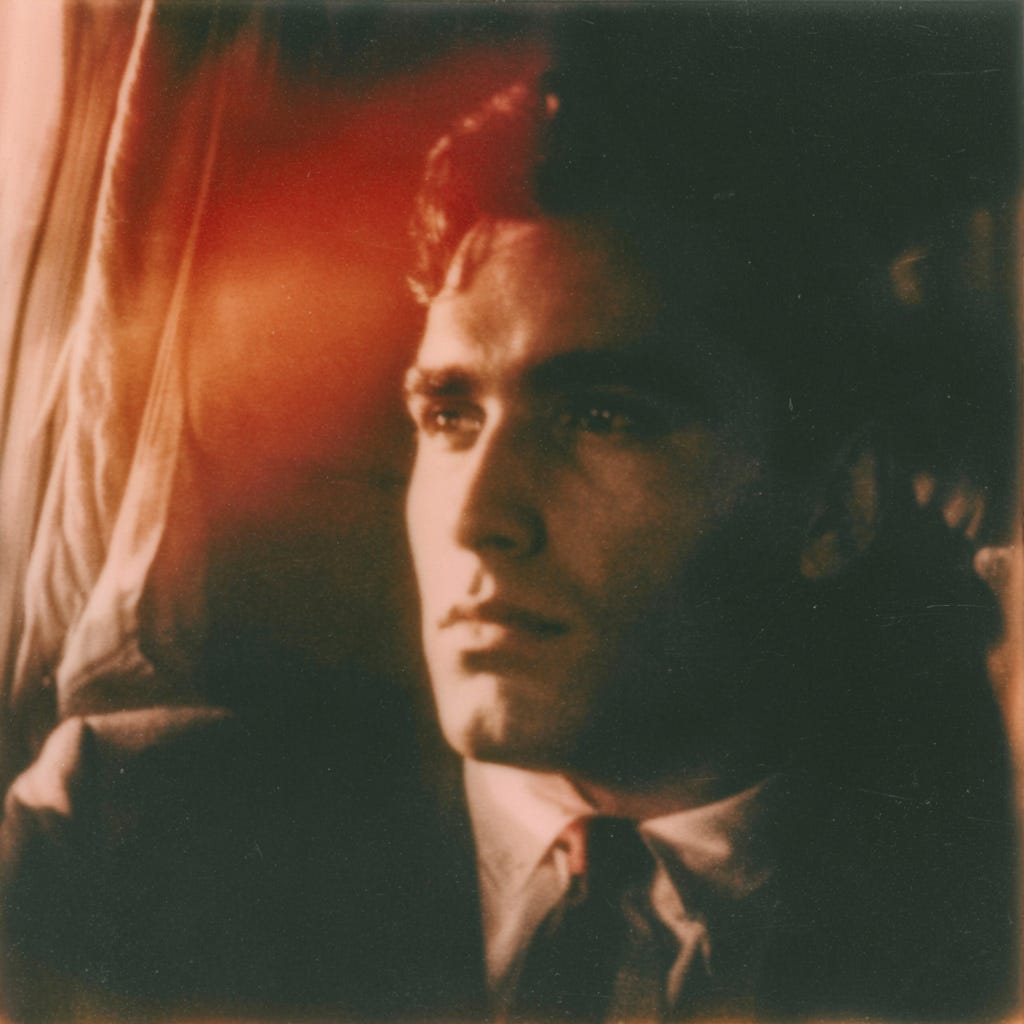
“Since 1973 the United States has become heavily dependent on oil from the Middle East, and has seen US interests in the area increasingly affected by events and regional politics that are not subject to US control. US relations with Israel, the Arabs, and some of the South Asian states have experienced repeated strains as these states have pursued their national interests independent of the great powers. US influence in the area has declined, and manifestations of anti-American feeling have increased, in part because the United States is seen as irresolute, but basically as the result of a historical trend that is not likely to be reversed.”
–CIA paper, December 1979
“Asshole!” the CIA officer exclaimed and slammed his hands on the desk in frustration. He took some time to get himself under control. “Give me the manuscript, Mansur,” he demanded, more calmly than before. Mansur Rafizadeh, the former U.S. Chief of SAVAK, had written a book of his experiences as a member of the Iranian secret police. After learning of this, a senior CIA officer whom Rafizadeh knew asked that the two of them meet in a New York hotel suite on March 26, 1986. The officer first tried persuasion, then proposed that the CIA censor and rewrite parts of the manuscript. He offered a large, tax-free payment in exchange for control over the content that had taken him three years to write: “Give us the manuscript and we’ll give your cost plus whatever you think three years of your own time is worth. No receipts necessary. Just give us the total.” When Rafizadeh refused, the Agency officer suggested that the FBI could arrange his assassination without anyone solving the case: “The Bureau will get rid of you. Picture this. You are being interviewed or giving a lecture somewhere. A man in the crowd shoots you. Who could figure out who shot you? One of the Shah’s people? One of Khomeini’s people? After all, you were SAVAK!”
Rafizadeh had difficulty sleeping after the encounter. Would he be taken out through a car bomb? Would he be mugged randomly one day in the street? Would he be surreptitiously drugged and die from an overdose? He informed an old FBI colleague of the conversation; the agent was upset that the Bureau was being portrayed as an assassination arm of the CIA and told him to keep a log of the discussion while he could still remember it well. Rafizadeh also consulted with his lawyer and ensured multiple copies of the manuscript were secretly distributed. With mounting pressure from the Justice Department, he remained defiant and his lawyers insisted he had a right to publish; he had never been a U.S. government employee. Rafizadeh felt that the public had a right to know. Following the emergence of the Iran-Contra arms-for-hostages scandal in late 1986, the U.S. government soon lost interest in stopping the former SAVAK Chief’s memoir.
Methods
The top-secret 1979 Senate document that reporter Dale Van Atta managed to obtain from a U.S. State Department source for Jack Anderson’s syndicated column “Washington Merry-Go-Round” also contained a multitude of secrets; these were never to be publicly revealed again. The report had been triggered by a scandal known as Koreagate, which involved a covert effort by the South Korean government, particularly through the Korean Central Intelligence Agency (KCIA), to influence American policy and decision-making. As U.S. policymakers began reconsidering their level of commitment to South Korea, the KCIA moved to shore up support in Washington. Central to the operation was Tongsun Park, a well-connected South Korean businessman who acted as an intermediary between the KCIA and influential figures in the United States. Park cultivated relationships with members of Congress, offering them cash payments, expensive gifts, and other favors in exchange for political support. A congressional investigation revealed that dozens of members of Congress had been approached and at least ten House members had accepted money or favors.
The resulting report from the Senate committee contained numerous revelations regarding the operations of foreign intelligence services in the United States. Whereas the information regarding Chilean agents has mostly been declassified, the other countries’ activities remain classified to this day. Beyond Chile, according to Anderson’s coverage, the report covered Iran, the Philippines, the Soviet Union, Taiwan, and Yugoslavia, their activities ranging from espionage to assassination. The report, written by Senate staffer Michael Glennon, found that the activities of foreign agencies violated three federal laws, constitutional rights of Americans, and “customary international law.” Glennon concluded that the activities were not stopped due to a multitude of reasons, including “self-protection to bureaucratic laziness and jurisdictional pettifogging,” as summarized by Anderson.
The CIA was hesitant to take action lest it endanger their own agents overseas with retaliatory action from the countries in question. Glennon spelled out that for at least one nation, it was not mere conjecture: “the government of Iran has, several times, threatened to retaliate against CIA if actions were taken against its intelligence operatives in the United States.” For its part, the FBI had made “no affirmative effort” to gather much information on these activities, while the White House’s National Security Council did “not collect significant amounts of intelligence” on the topic. The State Department, in turn, relied on the other three groups to collect the information, which did not amount to much. “Because the pieces are not put together, assessment of the problem and the development of a solution have fallen through the cracks.” Anderson referred to the U.S. as an “easy stomping ground” for foreign spy agencies, adding a quotation from the report that “available evidence indicates that certain residents of the United States have valid reason to fear abridgement of [their] rights and protections by members of foreign intelligence services.”
Similar to Chile, Iran had also been subjected to a CIA-generated coup, following which the new regime had a desire to target dissidents, in this case critics of the Shah, the leader of Iran. Following an exposé on SAVAK and their operations in the U.S., the Iranian government warned of the potential for retaliation on their part. The first secret messenger was Richard Helms, former CIA Director and then the U.S. Ambassador to Iran. Referring to a statement from the Iran Foreign Ministry, Helms wrote in a cable on November 7, 1976 to Secretary of State Henry Kissinger: “The statement serves notice that any restraints imposed upon, or actions taken toward, Iranian representatives in the United States would be reciprocated here.” The Iranian position was clarified in another State Department cable: “[Iranian Ambassador Ardeshir Zahedi] said that if we did not like what SAVAK is doing here, Iran would send its agents home. Then, of course, the United States would have to bring its agents from Iran. It was, he said, simple reciprocity.” On December 27, Helms added: “The Shah is very concerned to maintain the special relationship between Iran and the United States. He contends that no SAVAK representative is operating against the United States or its citizens. Put another way, SAVAK is not authorized to conduct activities counter to U.S. law.” Helms recommended against instigating “an inflammatory, public brouhaha over possibly ill-advised intelligence activity” from SAVAK. “As you well know, we are very beholden here in the intelligence area and therefore correspondingly vulnerable.” These excerpts from the messages were eventually declassified by the State Department.
Helms’ final warning from the Shah came on January 3, 1977, in a note so sensitive he sent it through a double-encrypted State Department line so that his former employer, the CIA, could not read it. The cable quoted the Shah on the subject of the U.S. potentially interfering with SAVAK agents, with him saying that he “would not be able to overlook the presence of 70 of your people who are carrying out activities contrary to Iranian law,” or “others whom we do not know about officially.” A CIA source told Van Atta that Agency officials were “shocked” to learn of this cable’s existence in the Senate report and had not been told of the threats at the time they were made. Anderson reported with that once the Shah and Helms were out of office, Helms helped the former Iranian leader in his search “for a suitable mansion…in the Virginia hunt country.”
As far as the State Department knew, Mansur Rafizadeh was merely an “official at [the] Iranian UN Mission,” as a telegram indicated on December 30, 1976. By August 1977, Jack Anderson revealed in a column that Rafizadeh was in fact the “top SAVAK agent in the United States,” using an FBI telegram as a source that also referred to him as a “foreign liaison source” of the Bureau’s New York office. The Bureau explained this term to Anderson as simply meaning individuals who provided them with information: “if we get something on threats or demonstrations, we call them. They are not paid, and there is nothing covert about it.” Anderson reported that SAVAK documents he obtained indicated the organization was involved in spying on students who opposed the Shah and used methods such as tapping phones, forging documents, and carrying out burglaries to achieve their objectives. At the time, Rafizadeh “vehemently denied any connection with SAVAK.”
Violent Youth
Rafizadeh was introduced to violence early where he grew up in the city of Kerman in Iran, when at the age of thirteen he witnessed the public torture and death of a starving peasant who had stolen grain to feed his family. “Please…He will die!…I beg you, beat me instead,” the man’s wife pleaded. The overseer ordered the punishment to continue, shouting, “Beat him! Beat him! Harder!” The man ultimately died with no one intervening.
When Rafizadeh asked his father why the killers were not punished, he was told: “Injustice begins at the top.” Rafizadeh naively hoped to petition the Shah but this was dismissed; his father explained that real change could not come from authority alone but from education. His father assigned him with the task of reading newspapers aloud to the illiterate, because “the illiterate man is the blind man.”
Rafizadeh experienced violence first-hand at school, with tactics such as the falaka, in which children were beaten on the soles of their feet. He was once struck by a teacher and labeled “an idiot.” Cruelty was widespread, with children re-enacting the brutality they learned from grown-ups on neighborhood animals.
Through reading to townspeople, Rafizadeh learned of their admiration for Americans, whom they view as “principled…humanitarian…generous.” He once saw a man in a three-piece suit leading a donkey wearing a tie, the clothing all donated from the United States. Some men put on American women’s clothes. “Don’t laugh, Mansur. The man is clothed,” his father admonished him. “Be thankful for him.”
Early Leaders
Rafizadeh’s political awakening was sparked by hearing the Iranian politician Mozzafar Baghai speak in Kerman. He recalled being “enchanted” by the speech, particularly its mix of anti-imperialist critique and personal responsibility. Baghai condemned British influence in their country: “People deserve the government that rules them…if the child does not cry, she will give him no milk.” He urged action over passivity: “Do not accept injustice!...Stand up! Fight for your rights. Vote!”
As the movement to nationalize Iran’s oil grew, Rafizadeh joined a peaceful march, but the protest was violently broken up. He was arrested, beaten, and jailed; he felt pride in having taken part in the demonstrations. To his surprise, both his father and Baghai rebuked him for his actions. Baghai explained: “Violence breeds violence…Nothing gained by violence can result in good for the people.” Baghai argued that resisting the police only frightened supporters and weakened the movement. Moving to Iran’s capital to attend Tehran University in 1951, he entered politics and began working with Baghai’s Toilers Party while continuing his studies in law school. During a demonstration in 1951, he witnessed state violence and the Shah’s exercise of power first-hand: “Suddenly I saw tanks moving toward us. Rapid machine-gun fire followed. Bodies fell all around me, including that of my friend, Amir Biyar, killed instantly.”
Rafizadeh supported Iran’s Prime Minister Mohammad Mossadegh at the time, due to his pursuit of the nationalization of Iranian oil. “To us, he appeared to be the new Messiah,” he recalled, “one possessed of altruism and purity.” His view soured as Mossadegh became more authoritarian: “he would become the body of legislators, pass laws without going to Parliament, and, as chief executive, enforce those laws.” Mossadegh was arrested, confined to house arrest until his death, and the Shah returned to power with General Zahedi installed as Prime Minister. Rafizadeh began to see a downward trend in Iranian leadership: “Zahedi was just another rubber-stamp dictator.” For Rafizadeh, these were simply a course of events happening organically in Iran; he had no idea his installation and the Shah’s return had been engineered by the CIA in conjunction with MI6, complete with project planning, Agency officers executing the plan, and a post-victory celebration.
Capture
After the Toilers Party was blacklisted and forced to stop publishing its newspaper, Rafizadeh was lured away from party headquarters under false pretenses and kidnapped. Goddamn, this time I’m in trouble, he thought. He was taken to Ghazel Ghaleh Prison, where he was beaten and interrogated by the police chief, who threatened him with scissors: “Huh! Want to have your flesh cut, do you? You’d better tell me what I want to know! Who sees Dr. Baghai? Who calls him? Who killed Afshartous? What goes on at party headquarters? What are you planning?”
It took Rafizadeh over a decade to learn what had happened to Mahmoud Afshartous, the police chief who had been kidnapped on April 21, 1953. Several days later, his mutilated body was found. General Nematollah Nassiri later complained to him: “I’m tired of paying these old retired army people forever. I wish they would die already.” As payment for their services, the Shah had placed Afshartous’ killers on a lifetime payroll.
Rafizadeh endured repeated beatings, alternating between brutality and manipulative kindness; the officer told him: “I am a merciful man. I feel great pity for you. Go back to your cell. Think about it. I’m sure you’ll feel differently in the morning.” Eventually, after continued pressure, the prisoners were unexpectedly released after signing a statement: “It is obvious that you are all good people,” they were told. “We apologize for any misunderstanding.” Their release was influenced by higher-level intervention; Rafizadeh saw justice now as an arbitrary system.
When Vice-President Richard Nixon’s visited Iran in December 1953, Rafizadeh participated in a student protest and violence erupted again: “The police followed us inside and opened fire with machine guns. The bullets ricocheted and echoed in the marble lobby. Three students were killed instantly…” Baghai lamented the state of the country: “Here in Iran, we have no freedom—no sign of freedom or democracy.” Rafizadeh was tortured once more by General Azmoudeh, who stated: “You think God will hear you here? Even the braying donkey can’t be heard here.”
Although he continued to be politically active, Baghai encouraged him to leave Iran for education in the United States:“Go there empty, as though you know nothing. Listen to the people. Don’t argue. Don’t show off. Learn!” Before he left, his cousin offered a grim assessment of Iran’s government, which had lost its democratic structure following the 1953 coup: “Our leaders are just such horrifying maids and we have more to fear from them than anything else. Each new ‘servant’ is worse than the last.”
Shock
The Town Crier newspaper of Wayland, Massachusetts had the following note in its February 19, 1959 issue: “An American tradition, Valentine’s Day, was enjoyed for the first time last Saturday by several foreign students who were guests in the following homes...Mr. and Mrs. H. J. Finison...Mansur Rafizadeh of Iran...”
Rafizadeh was terrified of romance more than most Americans, once being touched on the arm by a girl in the back seat of a car. He cautiously eyed the father driving the car in a rear-view mirror, expecting any moment to be castigated by the parent and in his mind, the consequences could have been dire. Instead, the father shook his hand as they exited the car. Dates were also devastatingly nerve-wracking: “Who was behind us—her brother?…I would lose my visa. I would be deported, beaten, disgraced!”
Through dictionary-based communication, he eventually figured out that a nun, Sister Mary Elizabeth, wanted to have sex with him. She later visited him at Harvard University: “She was a beautiful and sensitive person, for whom I shall always reserve a special place in my heart.” Harvard for Rafizadeh at that time offered “such freedom…such simplicity,” yet as he would gaze upon the campus his thoughts would turn back to Iran: “I recalled the bloody hands of my fellow students in Tehran clutching at the windows as they fell.”
Joining SAVAK
In 1959, Rafizadeh had a chance introduction to Senator John F. Kennedy, who listened to his account of life in Iran and “made a promise that if he were elected president in 1960, he would advise the Shah to undertake social reforms.” Rafizadeh’s optimism was quickly dashed by a close associate, Ali Zohari, who wrote to him a warning that “all such men promise many things when they are not in power, but…forget them quickly once they get into office,” and bluntly concluded that “American foreign policy has a love affair going with the Shah. Nothing is going to change.”
After meeting a New York Times reporter whom he helped create news articles on the Shah, Rafizadeh met a man who questioned him persistently and claimed to work for the State Department, later learning this was a CIA man. This marked what he described as his “first tenuous involvement with American intelligence.” He was also encouraged to join Iran’s secret police organization, SAVAK. General Hassan Pakravan argued, “We greatly lack good people. Why don’t you join us?” When he resisted, Pakravan reframed the offer as moral compromise inside of a flawed system: “No one can force you to take this job…But someone will take the job and that someone may be evil.” Rafizadeh did not find it difficult to poke holes in their security apparatus: “How on earth can something stamped ‘Top Secret’ in Farsi require the signature of an American doctor?” he asked Pakravan. “You see?” Pakravan responded. “You see why we need you? That’s just the kind of work we get from these people.”
Rafizadeh was nonetheless completely unequipped for the position, with no training in intelligence work and no clear understanding of what the job required. At first, his cover was that of a student and later that of a diplomat assigned to the United Nations. For the first six months, he was given no real duties. When Pakravan returned to New York after that period, Rafizadeh complained he was representing SAVAK in the United States but doing nothing. “All you have to do, Mansur, is read the newspapers,” Pakravan explained. “Whenever you find an article about Iran, save it. Read The New York Times Book Review, and if there are good books, buy them for me. Twice a month send all the clippings and books to my office in a diplomatic pouch. Do not forget the book reviews.”
In addition to these basic tasks, SAVAK officials frequently sent word about relatives or friends traveling to the United States for medical care, and he was instructed to receive them, arrange hospital visits, and ensure they were properly treated. Over time, he also became responsible for the children of officials studying in America, monitoring their academic performance, managing their allowances, and intervening when difficulties arose. He was now known internally as SAVAK chief in the United States. Rafizadeh’s close associate, General Pakravan, became head of SAVAK in 1961.
The CIA played a central role in the creation and early development of SAVAK, the Agency providing assistance in organizational planning, and training Iranian personnel both domestically and abroad in surveillance, counterintelligence, and interrogation techniques. SAVAK quickly evolved into a powerful instrument of repression, becoming notorious for its surveillance, censorship, and use of imprisonment and torture against political opponents. Jesse Leaf, an Iran desk analyst for the CIA, later reported that the Agency was aware of SAVAK’s torture of dissidents and had instructed SAVAK agents in these techniques, referring to them as being “based on German torture techniques from World War II.” While no Americans did the actual torturing to his knowledge, Leaf did “remember seeing and being told of people who were there seeing the rooms and being told of torture. And I know that the torture rooms were toured and it was all paid for by the USA.” Rafizadeh later stated of SAVAK officers: “I would say about 300, 250 of them, they were sick. They did torture people, they killed people. They did almost everything. Unbelievable what they did.”
Until 1965, Mansur Rafizadeh’s contacts with the FBI and CIA remained largely routine, focused on standard diplomatic and intelligence-related exchanges concerning Iran. That changed during a 1965 meeting in Washington with officials assigned to the CIA’s Iran desk. What began as an ordinary discussion of Iranian affairs shifted into a revealing exchange about how the United States interpreted developments in Iran. One of the CIA officials remarked: ‘“The Shah is advancing toward democracy. The Iranian people have far more freedom than in the past. His opponents are all Communists or reactionaries.” Rafizadeh was struck by what he perceived as a fundamental misunderstanding of the situation. To him, the American analysts were preoccupied with narrow categories, identifying Communists, measuring reforms, and tracking surface-level indicators, while missing what he believed was the deeper political reality unfolding in Iran. He saw a country heading toward instability, where political actors would inevitably deflect blame onto foreign powers such as Moscow, London, or Washington.
Frustrated by what he viewed as a dangerously distorted perspective, Rafizadeh eventually lost it: “You know, you Americans are the broadcasters of our lies,” he exclaimed. “Whatever lie we tell you, you believe!” The Americans were taken aback: “We do not!” they replied. Rafizadeh cited what he considered examples of misinformation regarding land reform, political freedom, and the Shah’s governance.
One of the officers attempted to steer the discussion back to specific operational matters, suggesting that broader political analysis should be set aside. Rafizadeh refused to disengage, insisting that American policymakers, including President Johnson, needed to understand the reality of the situation or risk being misled. When the meeting concluded, he left with the impression that he had been speaking to officials insulated from the realities of Iranian politics, focused only on technical indicators such as infrastructure development and income statistics, rather than what he considered the core issue: the erosion of fundamental political rights in Iran. What Rafizadeh did not know was that the CIA had worked to reinstall the Shah and were not about to sever this established relationship. The Shah acted as one of the CIA’s sources for information on Iran, Leaf explaining: “He was a regular contact for a case officer.”
SAVAK Ops
SAVAK was involved in the targeted elimination of those critical of the Shah, including journalists. One prominent case was Karimpoor Shirazi, editor of the tabloid Shooresh (Rebellion), whose paper published relentless cartoons and articles mocking the royal family. He particularly focused on Princess Ashraf, exposing alleged corruption, sexual scandals, and drug trafficking within the court. When martial law was imposed after the Shah briefly left Iran in 1953, Shirazi was arrested and imprisoned. Princess Ashraf, deeply angered by his publications, pressured the Shah to act, and Shirazi was soon reported dead in a prison fire. Authorities claimed he had been “playing” with a kerosene heater that accidentally ignited his clothing, despite suspicions surrounding the circumstances.
After SAVAK was formed in 1957, many individuals connected to such operations were incorporated into the new security apparatus, either because they were still useful or because they knew too much. Rafizadeh later encountered one such man who proudly admitted his role in Shirazi’s death: “I was the one who soaked him with kerosene while the others held him down. I couldn’t light him because my clothes had too much kerosene on them and I would have burned, too. One of the other guys had to roll up a rag, dip it in kerosene, light a match, and throw it at him as we all ran like hell out of the room.”
Rafizadeh recalled learning of the intercepted surveillance of Princess Shahnaz, the Shah’s daughter, in which she spoke to her father in hostile terms: “Why are you calling me, you bastard? Leave me alone. You are a murderer. A pimp. What do you want from me?” The Shah replied: “I know you’re not feeling well. I’ll call again.” When SAVAK officers attempted to report the conversation, their superiors got angry, instructing them not to forward the material to the Shah; he did not need to read a transcript of his own conversation. The SAVAK director was not impressed: “Later Nassiri told me that he couldn’t believe just how stupid these officers were,” Rafizadeh remarked.
While working in the United States in 1965, Rafizadeh was concerned to learn that the Shah had replaced General Hassan Pakravan with General Nematollah Nassiri as head of SAVAK. Rafizadeh understood the underlying cause to be Pakravan’s opposition to the Shah’s decision to exile Ayatollah Ruhollah Khomeini, whom the Shah had previously removed to Turkey and later indirectly pushed toward political prominence abroad. In Rafizadeh’s interpretation, the Shah’s repression has backfired; he “had transformed Khomeini into a sympathetic symbol of sectarian oppression” and, in effect, “created a new heir apparent.”
During the Shah’s 1967 visit to the United States, Rafizadeh observed that, upon arrival in New York, SAVAK for the first time confronted religious demonstrators openly carrying portraits of Khomeini and demanding his return. The Iranian security services were instructed to discredit them as “traitors,” allegedly funded by foreign governments, and to suppress their visibility in the American press. Rafizadeh witnessed the official American reception of the Shah at the White House, where President Johnson praised him as a reformer guiding Iran toward progress “without violence and bloodshed,” and toasted him as the architect of Iran’s future.
The pattern repeated months later at Harvard University, where the Shah was to receive an honorary degree. While reviewing the prepared speech, Rafizadeh noted its sweeping moral claims about poverty, injustice, and global solidarity, but concluded starkly that “all of this fine-sounding rhetoric was a lie.” He watched security preparations closely as known demonstrators entered the venue, and, contrary to protocol, allowed them to pass: “Good people,” he said to security personnel, knowing they would disrupt the ceremony.
At an event months later at Harvard University, the Shah was met with boos and chants of “Butcher! Liar!” and repeatedly interrupted by students and demonstrators. Security forces struggled to contain the chaos and Rafizadeh had a conflicted reaction, feeling sympathy for the guests but also a sense of satisfaction rooted in resentment toward the Shah. Later, at Logan Airport, the Shah reprimanded him directly, declaring, “You are not doing a good job here,” and ordering him to ensure future control of dissent through bribery or removal of demonstrators. “Here he was again, plotting further bribery and slaughter,” Rafizadeh bitterly recalled. Outwardly, Rafizadeh remained obsequious: “Yes, Your Majesty. Of course, Your Majesty.”
Rafizadeh similarly failed to please the Shah’s sister, Princess Ashraf. There was an incident in New York where, as her security chief, he escorted her through protests condemning her appointment in 1967 as the Iranian delegate to the UN Commission on Human Rights. Demonstrators surrounded her car shouting “Shame, shame! Criminal!” and covering it in shaving cream. “We all began to laugh at the absurdity of the scene,” he remembered. The princess reacted with fury at him: “That entire incident was your fault!” She later proposed violent retaliation against protesters: “Softly, swiftly, you put their heads under water.”
Decline
In the summer of 1974, Rafizadeh accompanied General Nassiri to Washington for medical treatment at Walter Reed Hospital, and watched the collapse of an American presidency on television. “Damn! Damn! Too bad. Good man,” Nassiri commented on Nixon’s resignation. Rafizadeh echoed him: “Yes, General…Good man.” The general insisted it was the end of an era: “No one will ever be like Nixon to the Shah.” Curious about the depth of this political relationship, Rafizadeh pressed further and was told, with calculated vagueness, that “we…here and there, we donate to a campaign.” Rafizadeh described the influence operation as involving millions of dollars routed through intermediaries.
During their stay in Washington, Rafizadeh toured a private intelligence museum and took an interest in some dangerous devices on display that were small but capable of destroying entire buildings, attributed to Communist origin. Nassiri laughed and revealed the deception: “They were not made by the Communists. SAVAK made them! We told the Americans that they were Communist-made, and they believed us.” In a dinner with George H. W. Bush, the Republican National Committee Chair and future CIA Director insisted that SAVAK had to change its methods: “You have to do something about the torturing, the imprisonments.” Nassiri rejected the accusation outright: “We don’t do those things.” Bush pressed further: “If you don’t, why are all those reports coming out?” The Shah had chosen to use the language of “mental torture,” but this framing also drew Bush’s skepticism: “Who is to say that mental torture is any better than physical torture?”
Rafizadeh claimed the depravity went further. In one account, a teacher accused of insulting the Shah was brought from prison and tossed into a lion’s den in the royal zoo. He recalled Nassiri confirming events at the royal zoo, who admitted, “I turned my head. I couldn’t watch.” Following the 1979 Iranian revolution, Rafizadeh noted that Nassiri was “one of the first generals to be mercilessly tortured,” later paraded on television and executed.
By 1971, Rafizadeh had begun communicating regularly with CIA officers. One in particular, who was fluent in Middle Eastern affairs and initially meticulous in recording intelligence reports, later began to using a tape recorder to record their conversations. Over time, Rafizadeh observed the officer’s declining discipline due to alcoholism. He once found the officer asleep at a bar during a dinner arranged to meet his relatives. The officer apologized: “Oh...oh...I’m sorry. I had a hard day today...had a few drinks before you came. I was depressed. You find a table...I’ll wash my face and come over. Everything will be all right—you’ll see.” On another occasion, the officer was found intoxicated in a hotel lobby with classified materials, including a tape recorder and cassettes, left unsecured beside him. Rafizadeh warned him: “if someone hears my voice on this tape, I cannot deny what I said. Then what? I would face the firing squad!” The CIA eventually acknowledged the situation and reassigned the officer, later attempting to have him retire. Rafizadeh thought that despite his faults, the officer was among the more competent he had encountered.
From his point of view, Rafizadeh’s most difficult discussions with CIA personnel involved Iran’s future. He warned repeatedly that failure to plan for succession would be catastrophic. When he asked whether contingency plans existed for the Shah’s departure, an officer responded: “We don’t have any plans, and we don’t need any.” Rafizadeh cautioned: “If you have no undercover people and no contingency plans, when the Shah goes, you are dead.”
Sunset
By the early 1970s, Rafizadeh noted, SAVAK “had stopped informing the CIA about Iranian affairs and had begun surveillance on all CIA officers, tapping their phones and spying on them.” The Iranian secret police were disturbed by a case that involved Major General Ahmed Mogharabi, a senior officer suspected of espionage for the Soviet Union. General Gholam Ali Oveissi, Commander of the Imperial Iranian Ground Forces, warned Rafizadeh of “a very high-ranking army officer of spying for the Soviet Union,” explaining that “someone in my office was definitely leaking information to the Soviet Union, which passed it on to the Iraqis.”
Eventually, SAVAK concluded that Mogharabi had been working with the Soviet intelligence apparatus for nearly thirty years. The scale of the operation astonished even those investigating it, as he was “one of the KGB’s most trusted agents,” equipped with “ultra-sophisticated electronic intelligence devices that had been given to no other KGB agent in the world.”
The case quickly became of great interest to the CIA. The Agency requested both access to the detainee and examination of the recovered devices. SAVAK initially refused and the CIA continued to press them: “We want those devices,” one officer whispered to him, insisting that he intervene. Eventually, an arrangement was reached for the devices to be transferred for examination abroad, with assurances that they would later be returned.He later read in the New York Times a terse report from late 1977: “An Iranian general convicted of spying for an unnamed foreign country was executed today.” In 1978, in response to a query from a member of Congress, the CIA furnished the following information regarding his role in Iran: “our records indicate that General Mogharabi held the position of Deputy Chief (Programs) J-5, within the Supreme Commander’s Staff (SCS) since 1969. His responsibilities included plans, programs and budgets for the military equivalent of our Joint Chiefs of Staff.”
By the mid-1970s, Rafizadeh believed the Iranian system was unraveling internally. Key officials begin to lose faith in the Shah, even as they remained adversaries of one another. “Though each was against the others, privately they were now all against him,” he wrote. “Not a single person had faith in the future, the Shah or any part of his entire system.” General Nassiri, the head of SAVAK, appeared to be increasingly burdened by the demands of the system he served. At first, Nassiri hoped that the Shah might dismiss him before the conditions worsened: “None of the security forces are going to agree to his new plan,” he warned. “They’re not going to take part in wholesale killing. I know it. They’re fed up.” Before leaving for Tehran, Nassiri agreed to accept Rafizadeh’s resignation in advance, saying: “Write your resignation but don’t date it.”
Two years later, Rafizadeh met Nassiri again in Tehran and found him to be profoundly altered. The general arrived late for a lunch, dropping files onto a couch and collapsing next to them: “God, I’m tired,” he said. “Did you have lunch?” When Rafizadeh replied that he waited for him, Nassiri answered: “Poison, that’s what I had.” Nassiri described a system of staged violence: “Tired of killing. Sick of it. Goddamn! I have children! I can’t do it anymore.” He explained that the destruction of civilian property and killings were not incidental but deliberate: “For proof. To prove that it’s terrorist work. To make the people believe that enemies exist. And that the enemies are Communists.” Rafizadeh suggested he resign, but Nassiri responded: “He’ll never let me go. He’d get me somehow.” The psychological toll was weighing heavily upon him: “I’m up to here in blood!…You can’t wash off blood with water.” Rafizadeh noticed that Nassiri spent a lot of his time watching American cartoons on TV and he asked if the SAVAK leader enjoyed them: “Sure,” he replied, “they keep you busy and away from thinking.”
By 1978, Nassiri got his wish, reporting to Rafizadeh: “Two weeks. That’s it. I’ll be out…I’m seventy-one years old…No release for me. Thirteen years with SAVAK…No one knows yet. Don’t tell anyone except the CIA.” Rafizadeh relayed the news to the CIA liaison, noting the sensitivity of the transition, while Nassiri privately identified his successor: “My best friend, Moghadam.” When asked whether the successor knew, Nassiri replied: “No. He doesn’t. Don’t tell him.” Rafizadeh contacted Nasser Moghadam, who initially remained unaware of the appointment. When told directly, the new SAVAK leader reacted with disbelief: “Hmm. I’ll be damned.”
By June 7, as reported in the New York Times, Moghadam formally assumed leadership of SAVAK. Seeking a broader perspective, Rafizadeh met Hassan Pakravan, who immediately sided with the incoming leadership, who predicted the end of the Shah’s reign: “I see nothing but destruction for us…There’s no hope. They’re all crazy. Maniacs.” Pakravan also reflected on the political trajectory of the monarchy, recalling earlier conflicts with the Shah over repression and warning that Iran faced an unstable future. He concluded: “There’s not a thing we can do about it.” Rafizadeh’s had a similar conversation with Gholam Ali Oveissi, who dismissed the views of both Nassiri and Moghadam: “Both of them are wrong and they both belong in jail.” Yet Oveissi also acknowledged the fragility of the system, telling Rafizadeh privately: “Before the real trouble starts, I’ll get out. I’m not going to be trapped.”
Rafizadeh took preparatory steps for the expected fall of the regime, including obtaining passports and visas for his family to live in the United States: “I see trouble…and soon,” he told the Iranian consul. “I’ll have to surrender my diplomatic passport to the next regime.”
Military Coup
In November 1978, Rafizdeh learned that President Jimmy Carter’s national security adviser, Zbigniew Brzezinski, and Ambassador Zahedi favored a military coup in Iran. He was uncertain which of the two had first advanced the idea or persuaded the other, but he was convinced that both supported it. According to him, Henry Kissinger, Nixon’s former national security adviser, had agreed with the plan but added two conditions: “(1) All political prisoners who had been released by the Shah must be reincarcerated and (2) certain others still in custody, such as General Nassiri and Prime Minister Hoveyda, must be released.” The proposed operation centered on General Oveissi, “the martial-law commander,” viewed as the only man capable of carrying it out.
Rafizadeh described how, with this backing, Ambassador Zahedi contacted senior Iranian generals who approached General Oveissi. In his account, they urged him to act quickly, warning, “We’ll be killed behind our desks.” They insisted they were not opposing the Shah but trying to save him, proposing he be moved to Kish Island or Kerman, while “the political prisoners must be reincarcerated; and others, such as General Nassiri, must be set free.” General Oveissi, however, rejected the idea outright. “I swear that I will protect the monarchy,” he said. “I will not do anything against the Shah—I will take orders only from him. Get out—I do not want to hear any more about this matter.” Rafizadeh notes that “two of them were killed during the revolution, one behind his own desk, as he had predicted.”
During the coup planning, Rafizadeh was contacted by the CIA, which asked him to act as intermediary with Oveissi. He asked, “Whose idea is this? Yours?” They replied, “No.” When he asked who was behind it, they only answered, “The American government.” The objective, he was told, was that “The Shah was to be sent to an island, General Oveissi was to lead the coup, and when order was restored in Iran, the Shah was to be brought back.”
When Rafizadeh relayed the proposal, Oveissi again refused. “It seems to me,” the General said, “that there are governments within the government in the United States. No one knows who is boss—who should be making decisions.” He added bluntly, “Tell them I don’t want any part of this.” Pressed for alternatives, Oveissi replied, “No,” and warned that “a coup is not a viable solution to the problem in Iran…When you lower a person into a deep well with a rotten rope, the rope will break and the man will never get out of the well. I refuse to go into this deep well with rotten American rope!” Oveissi had his own plans: “Just between you and me, Mansur, I myself am trying to find a way out of the country. Tell my wife and family not to come back—I will join them.” Afterward, CIA officers informed Rafizadeh that a scrambling device used to secure his phone communications had been damaged and removed. A replacement for this device never arrived from the CIA.
Rafizadeh recounted that in early December 1978 a senior CIA officer, who always happened to wear a flower in his lapel, asked him to drive in silence from La Guardia Airport, saying, “I’m in no mood for a political discussion…Do me a favor and don’t talk.” Only later, at a restaurant, did the officer reveal the purpose of the meeting: “The United States government has finally come to a decision: We’re no longer going to support the Shah. We’re going to sit back and observe.” Washington now accepted it was “too late” to intervene, he was told. When Rafizadeh complained that earlier action might have changed the outcome, the officer replied, “I ask you for a favor—don’t rub salt in our wounds.” He advised Rafizadeh to remove his family from Iran, adding, “the storm is coming.” Shortly afterward, General Moghadam informed Rafizadeh that Shahpur Bakhtiar was the most viable candidate for Prime Minister. He urged him to tell the CIA: “Please ask them to support him.” Rafizadeh, however, replied that Bakhtiar “is not capable of accomplishing anything. He has no followers, no charisma…nothing.” Moghadam insisted he provide “a good recommendation,” but Rafizadeh refused to misrepresent his assessment, saying, “How can I give a good recommendation for something I do not believe in?”
The U.S. government confirmed their ambivalent stance in a cable sent by the U.S. Ambassador to Iran, William H. Sullivan, who reported that on December 26, 1978 he had a “tense, pregnant hour-long audience with the Shah.” The Shah was exploring the imposition of an “iron fist” crackdown. The Ambassador cautioned against the Shah’s idea of leaving Tehran and letting the military carry out repression, arguing that this would not shield him from responsibility and would send the wrong signal. The Shah expressed deep doubts about the feasibility of a military solution. He questioned whether the army would obey orders, whether violence would restore order, and whether workers, especially in the oil fields, would resume production or sabotage infrastructure. At the same time, he feared that surrender could lead to chaos and possibly the disintegration of the armed forces.
Seeking guidance, the Shah asked what the United States wanted him to do. Whereas in 1953, the U.S. had engineered a coup plot from start to finish and had worked to convince the Shah of its merits, there was no longer any such direction forthcoming. The Ambassador reiterated general U.S. support for restoring order but refused to take responsibility for the decision, insisting it was the Shah’s alone, and emphasizing that he did not have the luxury of time to remain undecided. Sullivan wrote that “while [the] Shah seems to be leaning towards the option of the iron first, he clearly has…no confidence it will work. He would also dearly like to have the President of the United States take, or at least share, the decision with him. I believe, as I told him, that if he is going to move in that direction, the decision and responsibility have to be his alone.”
U.S. General Robert E. Huyser was sent to Tehran in January 1979 to explore coup options. He described the messaging provided by the White House as “ambiguous…Brzezinski wanted it to convey to the Iranian military a green light to stage a military coup, and considered that it did so. President Carter intended it to convey such a meaning only as a last resort.”
Bakhtiar was appointed Prime Minister and as the Iranian crisis deepened, Rafizadeh received urgent late-night calls from the new leader, who now warned that Khomeini would arrive on February 1, 1979, and asked him to “make every effort… especially the French government—to delay Khomeini’s arrival for two or three weeks.” Rafizadeh replied that “they cannot do anything about it.” He urged Moghadam to “Leave the country…You don’t realize the danger you’re in.” Moghadam refused. Rafizadeh relayed Moghadam’s request to the CIA that Khoemini’s travel be stopped; an Agency contact responded increduously: “They must think we’re supermen! There’s nothing we can do.” Soon after, intelligence reached Rafizadeh that General Manouchehr Khosrodad had discussed shooting down Khomeini’s plane. The CIA asked him to ensure Moghadam controlled the situation. “Remember, I prevented that bloodshed,” Moghadam later assured him.
On the day Khomeini was expected to arrive in Iran, Rafizadeh personally put Moghadam’s wife and children on the flight from McGuire Air Force Base. He could only think of how mistaken Moghadam was in believing the National Front would stabilize the country and concluded that Moghadam himself would soon be in grave danger. Rafizadeh asked the CIA if they could help save three former SAVAK leaders from execution and his contact replied: “There’s absolutely nothing we can do...Anyway, my son, you have ruined my day. Goodbye.” Nassiri, Pakravan, and Moghadam were all executed by the new regime throughout 1979.
The Shah departed from Iran on January 16, 1979 and subsequently moved through a series of reluctant host countries, including Morocco, the United States, Panama, the Bahamas, and Mexico, before settling in Egypt. The Shah attempted to defend his legacy, relying in part on General Pakravan’s statement: “I assume full responsibility for every action taken by my office,” which Rafizadeh noted the Shah “twisted… to exonerate himself.” During his final hospital visit with the Shah in the United States, Rafizadeh heard the Shah remark, “It’s amazing how much freedom the press has here! It’s unbelievable that they’re allowed to question and criticize the government as they do.” The decline of the Shah’s era culminated in the seizure of the U.S. Embassy in Tehran and the taking of 66 American hostages, 52 of whom were held for 444 days. As the revolution approached, Rafizadeh claimed to have repeatedly urged the CIA to anticipate hostage-taking, arguing that it was deeply embedded in Iranian political culture. Using historical allegories, he warned them that “In a town where mice can eat iron, owls can carry off boys,” and insisted, “History will repeat itself!” He also attempted to alert them through historical precedent, recalling Genghis Khan’s envoys who were “captured in Khorezm, tortured, held hostage, and ultimately killed,” and warning that Iran followed a similar logic of retaliation and escalation. The CIA men laughed incredulously: “We don’t care how Genghis Khan made his reputation.”
When the U.S. Embassy in Tehran was finally seized on November 4, 1979, Rafizadeh heard contradictory reports about Embassy documents, first said to have been removed, then found still inside, some shredded, others discarded. A CIA contact ultimately admitted, “We don’t know,” before conceding that “important papers were shredded at the last minute and put in the garbage.” The Iranians who seized the U.S. Embassy ultimately discovered a large trove of documents, publishing a total of 77 volumes of State Department and CIA materials, some painstakingly reassembled from shredded copies. Rafizadeh’s name appears in Volume 23 through a confidential 1962 memo, which describes a meeting with Baghai where Rafizadeh served as an interpreter for two U.S. State Department officials, Frank Crawford and Douglas Marshall. Rafizadeh was described as “an Iranian student…who is returning to the U.S. to complete his graduate work in Economics….a pleasant and interesting man…”
Almost two years following the Shah’s death in Egypt on July 27, 1980, Rafizadeh visited the Shah’s son at his villa in Rabat, Morocco. “Mansur, I have some top-secret intelligence to disclose to you,” Crown Prince Reza claimed, stating that his father, the former Iranian Prime Minister Asadollah Alam, and his physician all died of the same illness, “malignant lymphoma.” He insisted that “in the early seventies, the three of them vacationed at a European resort,” where “the CIA managed to bombard them with radiation,” concluding dramatically: “The CIA—they were the ones who killed my father!” Rafizadeh was “amazed, not at the news, but at the crown prince’s belief in the story,” since “the CIA was actively assisting the movement to bring the Shah’s son to power.”
In a later visit to the Shah’s burial site at Al Rifai Mosque in Egypt, he saw there “a single bouquet of wilted white flowers” sitting near the resting place. Beneath a dust-covered Persian carpet, the tomb was revealed, the guide offering, “If you’ll pay me fifty cents, I’ll sweep the carpet for you.” Rafizadeh agreed and paid him but quickly regretted it, as the man “scurried off and returned with a large broom and began to sweep wildly,” filling the air with choking dust. Rafizadeh pleaded, “That’s enough! Please stop!” and paid him more when the guide revealed he had two children and needed the money. Left alone, he reflected on the collapse of his former ruler’s imperial status: “Could the Shah ever have dreamed that he would be buried in such a place…” where palaces, jewels, and roses were replaced by “some dead white flowers and a filthy Persian rug? But then could I ever have dreamed that the day would come when I would visit the Shah’s grave and pay three dollars to have it cleaned?”
Buried Secrets
There was several disturbing stories Rafizadeh never addressed in writing or interviews; despite the benign picture he painted of his activities in the United States, 9 years before the publication of his memoir, he was alleged to have committed criminal activities and been a participant in orgies involving high-profile Americans.
